



A note on health advice: This guide is for general information only and is not medical advice. Sleep problems can have many causes. If poor sleep is affecting your daily life, lasts more than a few weeks, or you suspect a condition such as insomnia or sleep apnoea, speak to your GP. In Ireland you can also find guidance at HSE.ie.
Why anxiety peaks at night
The 3am wake-up isn't random — several things line up against you in the small hours:

Your sleep is lighter
In the second half of the night you spend more time in lighter sleep, so you're much easier to wake. A small noise, a full bladder or a passing thought that wouldn't touch you at midnight can surface you completely at 3am.
Cortisol is rising
Your body begins a natural rise in cortisol — an alerting hormone — from around 2–3am to get you ready for morning. If you're stressed, that system can be over-sensitive, so instead of a gentle lift it lands like an alarm, switching on the fight-or-flight response and pulling you awake on edge.
There's nothing to distract you
By day your worries compete with work, people and tasks. At 3am there's only the dark, the silence and the worry — so the mind grabs it and magnifies it. The same problem genuinely looks different, and worse, at night.
The worry–insomnia loop
Anxiety and poor sleep feed each other. Anxiety keeps the brain in a state of hyperarousal that makes sleep harder; then a bad night raises anxiety the next day, which makes the following night worse. Over time a second worry layers on top: the fear of not sleeping itself.

That's the cruel twist — lying in bed thinking "I have to sleep, I'll be wrecked tomorrow" is itself arousing, and it trains your brain to associate bed with stress rather than rest. Breaking that association is exactly what the techniques below, and the gold-standard therapy CBT-I, are designed to do.
Wind-down techniques that have evidence

Have a "worry time" before bed
Earlier in the evening, spend ten minutes writing down what's on your mind and a short to-do list for tomorrow. Research shows people who write a detailed to-do list fall asleep faster — because the brain no longer has to keep everything 'open' in the dark. You're giving the worries a place to go that isn't 3am.
Slow your breathing
Slow, deep breathing with a longer out-breath than in-breath is one of the fastest ways to calm the nervous system — it switches you out of fight-or-flight and lowers stress hormones. Try breathing in for four counts and out for six, for a few minutes. Simple, free, and you can do it right there in bed.
Don't lie there fighting it
If you're still awake after about 20 minutes, get up. Go to another room, keep the lights low, do something calm and a bit boring, and only go back when you feel sleepy. This is a core part of CBT-I — it stops your bed becoming a place you associate with frustration.
Stop clock-watching
Turn the clock away. Calculating how little sleep you'll get ("only four hours now…") pours fuel on the anxiety and makes sleep less likely. A consistent wake-up time matters far more than any single rough night.
When it's more than a stressful patch
Everyone has anxious, sleepless nights now and then. But if racing thoughts wreck your sleep most nights for more than a few weeks, if worry follows you through the day, or if you're experiencing panic or persistent low mood, that's worth taking to your GP. Both insomnia and anxiety respond genuinely well to treatment — especially CBT — and our guide to insomnia help in Ireland sets out how to access it.
If you're struggling right now
You don't have to wait for an appointment to talk to someone. These Irish services are free, confidential and available any time:
- Samaritans — freephone 116 123, 24/7
- Text About It — text HELLO to 50808, free 24/7 crisis text support
- In an emergency, or if you feel unsafe, call 999 or 112.
Products that help some people
No product is a substitute for the techniques above or for professional support, but a couple are low-risk and worth knowing about:

- •Weighted blankets. The evidence is mixed but mildly positive — the gentle, even pressure feels calming, and some studies find reduced insomnia severity and anxiety. A common guide is roughly 10% of your body weight. Worth a try if the cost suits, but it's a comfort aid, not a cure.
- •A cool, dark, quiet room. Anxiety makes you sensitive to every disturbance, so removing them helps. Our guide to bedroom temperature covers the basics, and the sleep calculator helps you keep a steady, anxiety-soothing routine.
The two we've actually tested
Same honesty as above: these are comfort aids, not treatment. If you decide to try one, these are the two from that list we've tested ourselves.
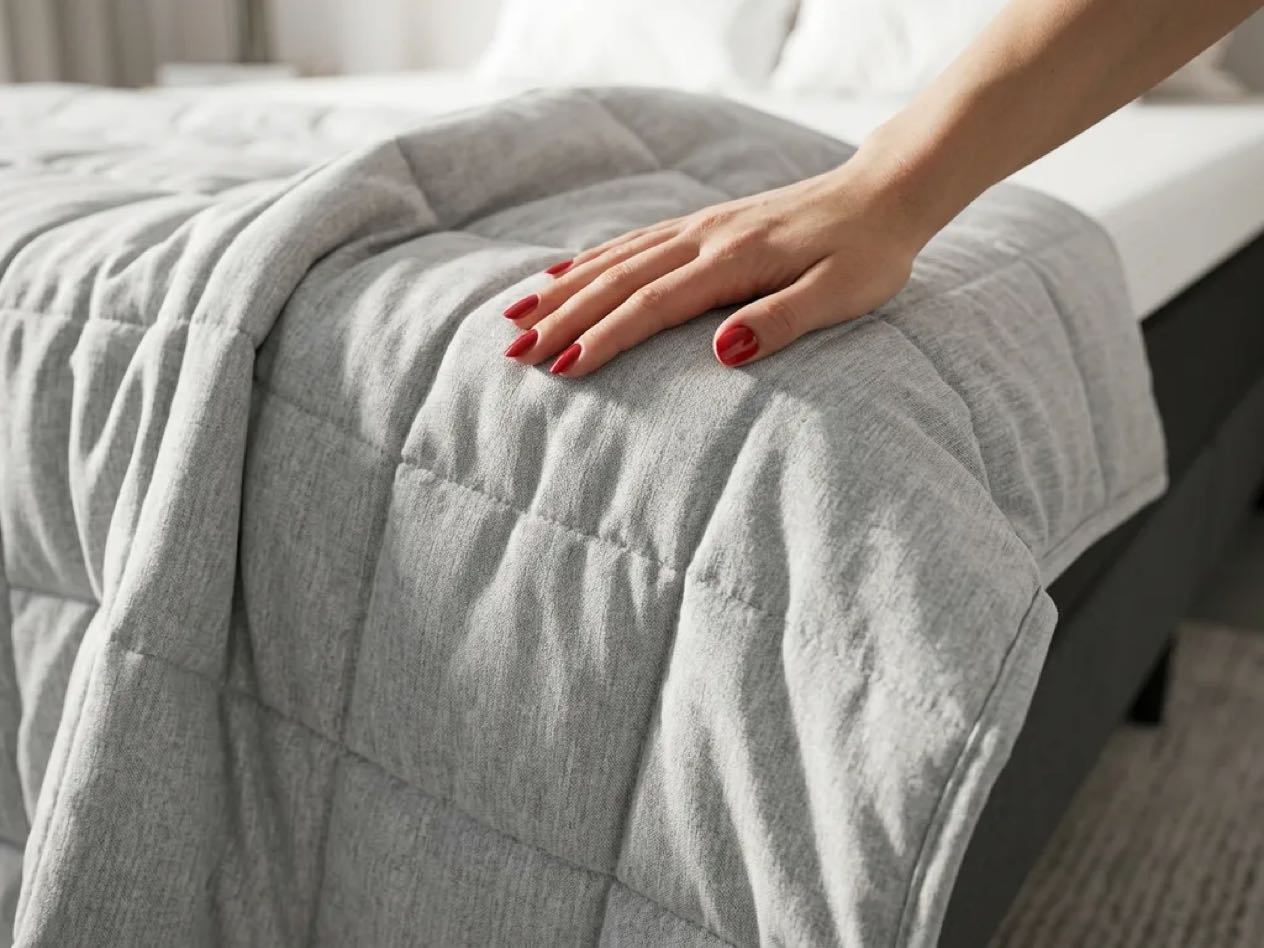
Emma Weighted Blanket
14 nights7 kg of even, all-over pressure — the mixed-but-mildly-positive option covered above, sized for adults roughly 55–80 kg.
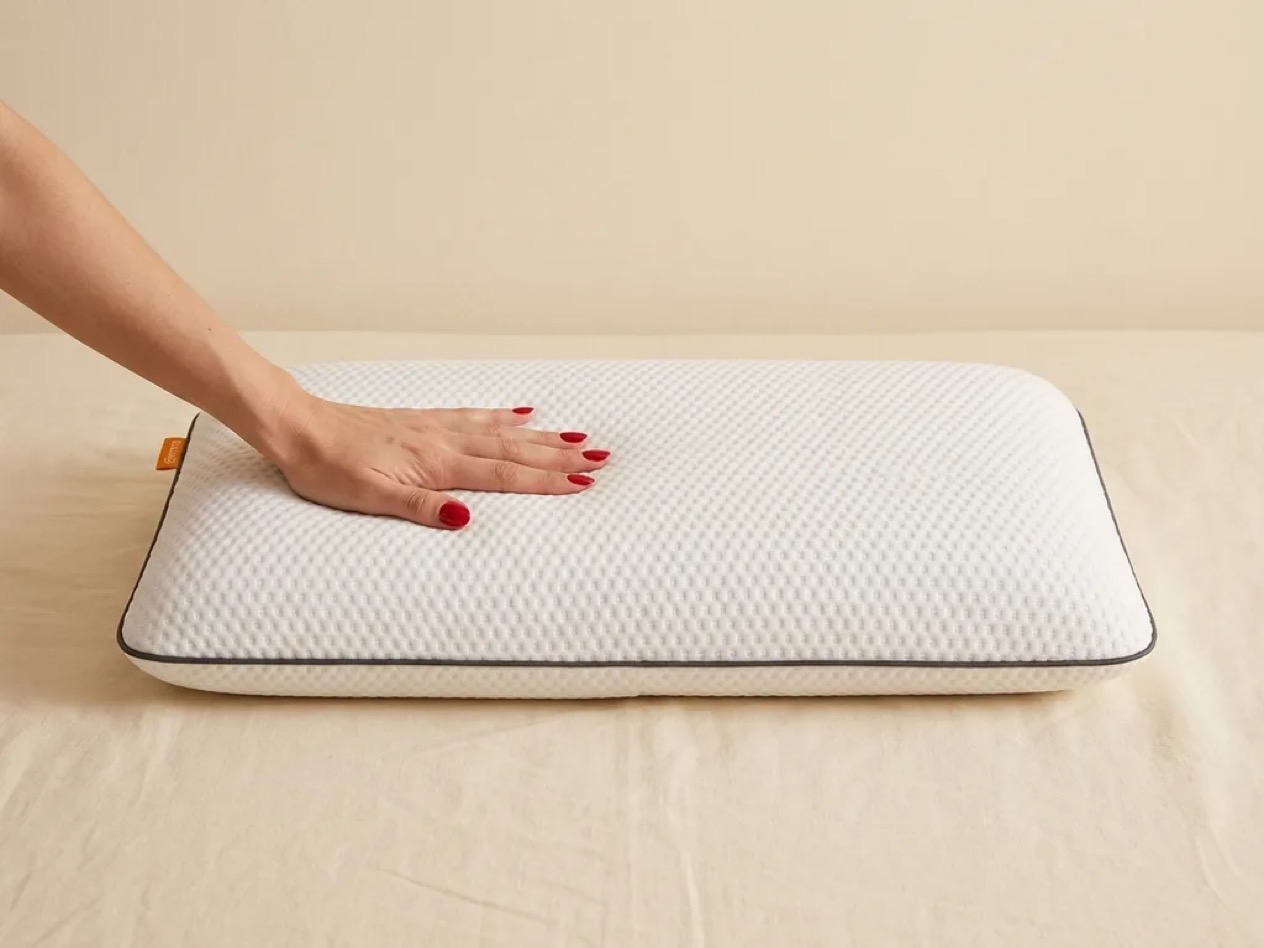
Emma Adapt Cooling Pillow
40×70 cm · 30 nightsA cool-to-touch surface to turn to when you wake hot and wired — a small physical reset that helps some people settle.
We may earn a commission if you buy through these links — it never affects our picks.
Frequently Asked Questions
Related Guides
Explore more sleep content to help you make the best choices.
Insomnia in Ireland
What actually works for chronic insomnia — and how to access CBT-I here.
Read moreWhy Am I Always Tired?
Common causes of daytime exhaustion — and how to tell tiredness from poor sleep.
Read moreSleep Calculator
Find your ideal bedtime by sleep cycle — a steady routine is calming in itself.
Read moreIdeal Bedroom Temperature
Cool, dark and quiet — remove the small disturbances anxiety amplifies.
Read moreSleep Trackers Tested
What sleep tracking can and can't tell you — and when the data feeds the worry.
Read moreMattress Quiz
Two minutes of questions to match you with a comfortable, undisturbed setup.
Read moreSources
- Sleep Foundation — Anxiety at Night: Causes and Tips for Relief. View source
- Johns Hopkins Medicine — Sleepless Nights? Try Stress Relief Techniques. View source
- The effect of weighted blankets on sleep and related disorders: a brief review (peer-reviewed). View source