



A note on health advice: This guide is for general information only and is not medical advice. Sleep problems can have many causes. If poor sleep is affecting your daily life, lasts more than a few weeks, or you suspect a condition such as insomnia or sleep apnoea, speak to your GP. In Ireland you can also find guidance at HSE.ie.
What insomnia actually is
Insomnia is more than the odd restless night. The HSE describes it as having difficulty sleeping — struggling to fall asleep, to stay asleep, or waking too early — three or more times a week, in a way that leaves you feeling unrefreshed and affects your day. Almost everyone has a bad patch now and then; insomnia is when it becomes a pattern.
Acute (short-term) insomnia
Lasts days to a few weeks and is usually triggered by something identifiable — stress, grief, a deadline, illness, jet lag or a new baby. It often resolves on its own once the trigger passes.
Chronic insomnia
Poor sleep three or more nights a week for three months or longer. It can take on a life of its own — anxiety about not sleeping becomes part of what keeps you awake. This is the type that responds best to structured treatment.
Insomnia can also be a symptom of something else — anxiety, depression, chronic pain, the menopause, or a sleep disorder such as sleep apnoea. That's a big reason why seeing a GP matters: treating the underlying cause often does more than chasing the sleep itself.
If sleeplessness is affecting your mental health
Long-term poor sleep takes a real toll on mood and coping. If you're struggling, you don't have to wait for a GP appointment to talk to someone — these Irish services are free and confidential:
- Samaritans — freephone 116 123, 24/7 (free, and doesn't show on your phone bill)
- Text About It — text HELLO to 50808, free 24/7 crisis text support
- In an emergency, or if you feel unsafe, call 999 or 112.
Sleep-hygiene basics that actually have evidence
"Sleep hygiene" gets thrown around a lot. The honest position from the research is this: good habits genuinely help short-term sleep problems and are worth doing, but on their own they are not an effective treatment for chronic insomnia. They're the foundation, not the cure. The HSE's core advice:

One habit worth singling out: if you can't sleep, don't lie there clock-watching. Get up, go to another room, do something calm and dimly lit, and return to bed only when you feel sleepy. Lying awake frustrated trains your brain to associate bed with stress — the opposite of what you want.
CBT-I: the first-line treatment, explained
Cognitive Behavioural Therapy for Insomnia (CBT-I) is the treatment international guidelines recommend before medication for chronic insomnia, and the HSE says it "can be as effective as medicine." It's a structured, time-limited programme — typically delivered over a number of weeks via self-help, one-to-one sessions or a group — that retrains the systems keeping you awake. Sleep hygiene is just one small part of it. The active ingredients are:

Stimulus control
Rebuilding the link between bed and sleep — using the bed only for sleep, and getting up if you're awake — so your body learns to switch off there again.
Sleep restriction
Temporarily limiting time in bed to match the sleep you're actually getting, which builds sleep pressure and consolidates broken sleep into a solid block. It's done with a therapist or programme, not guessed at alone.
Cognitive techniques
Tackling the racing, anxious thoughts about sleep ("I'll be wrecked tomorrow") that fuel the cycle, and replacing them with more realistic ones.
Relaxation training
Practical methods — breathing, progressive muscle relaxation — to lower the physical arousal that keeps the body too alert for sleep.
Most people see meaningful improvement within a handful of sessions, and unlike tablets, the benefits tend to last after the programme ends because you've learned skills rather than relied on a drug.
How to get help in Ireland
This is the part most international sleep guides can't tell you. Here's how the Irish system actually works.
Start with your GP
Your GP is the gateway. The HSE advises seeing them if you've had sleep problems for around a month and changing your habits hasn't helped, or sooner if poor sleep is badly affecting your daily life or mood. A GP can check for underlying causes (thyroid issues, depression, sleep apnoea, medication side effects), point you toward CBT-I, and make referrals. It's worth keeping a brief sleep diary for a week or two beforehand — it makes the appointment far more useful.

CBT-I and digital CBT options
- •HSE SilverCloud — a free, guided digital CBT service. You can't self-refer; access comes through your GP, primary care psychology, a community mental health team or Jigsaw. It's aimed at the anxiety and low mood that so often sit underneath insomnia.
- •Dedicated CBT-I programmes — services such as St Patrick's Mental Health Services run structured CBT-I group programmes (delivered online over several weeks) for adults with chronic insomnia, accessed by GP or psychiatrist referral.
- •Private CBT-I — psychologists and accredited therapists across Ireland offer one-to-one CBT-I, and there are reputable self-help books and apps built on the same method if you'd rather start independently.
Public waiting lists can be long, so ask your GP what's realistically available in your area and whether a self-help CBT-I programme is a sensible first step while you wait.
The realities of sleeping tablets
People often assume the GP will reach for a prescription — in fact the HSE notes that GPs rarely prescribe sleeping pills for insomnia, and for good reason. This is general information, not advice to start, stop or change any medication; only your GP can make those calls.
The main prescription options are benzodiazepines and "Z-drugs" such as zopiclone and zolpidem. They're licensed only for short-term use in severe, distressing insomnia. Irish prescribing guidance (the HSE's Medicines Management Programme) recommends the lowest effective dose for the shortest possible time — usually no more than two to four weeks — because the body builds tolerance, and dependence and difficult withdrawal can follow. These are controlled drugs in Ireland.
Over-the-counter pharmacy aids (such as antihistamine-based products) may help for a night or two but, as the HSE points out, they don't cure insomnia and aren't a long-term answer. The thread running through all the official guidance is the same: tablets are a short-term bridge at most, while CBT-I is the treatment that actually resolves chronic insomnia.
When your sleep environment is part of the problem
Before you assume it's "just insomnia", it's worth ruling out the simple, fixable things — because a poor environment can mimic or worsen insomnia and it's the cheapest problem to solve. A bedroom that's too warm, too bright or too noisy fights against sleep, and an old or unsuitable mattress that leaves you aching and shifting can break your night into fragments without ever fully waking you.

If you wake hot, sore, or feel a dip or sag under you, the bed itself may be doing some of the damage. It's not a cure for clinical insomnia — but it's a sensible, low-risk first move alongside the evidence-based steps above.
Not sure if your mattress is helping or hurting?
Our 2-minute quiz matches you to the right type, firmness and size for how you sleep — a useful way to rule the bed in or out. No email required.
Take the 2-minute mattress quiz →Two small comfort upgrades
No product treats insomnia — CBT-I and your GP do that work. But once the basics above are in place, these two remove small physical irritations that give a wired brain something to latch onto.
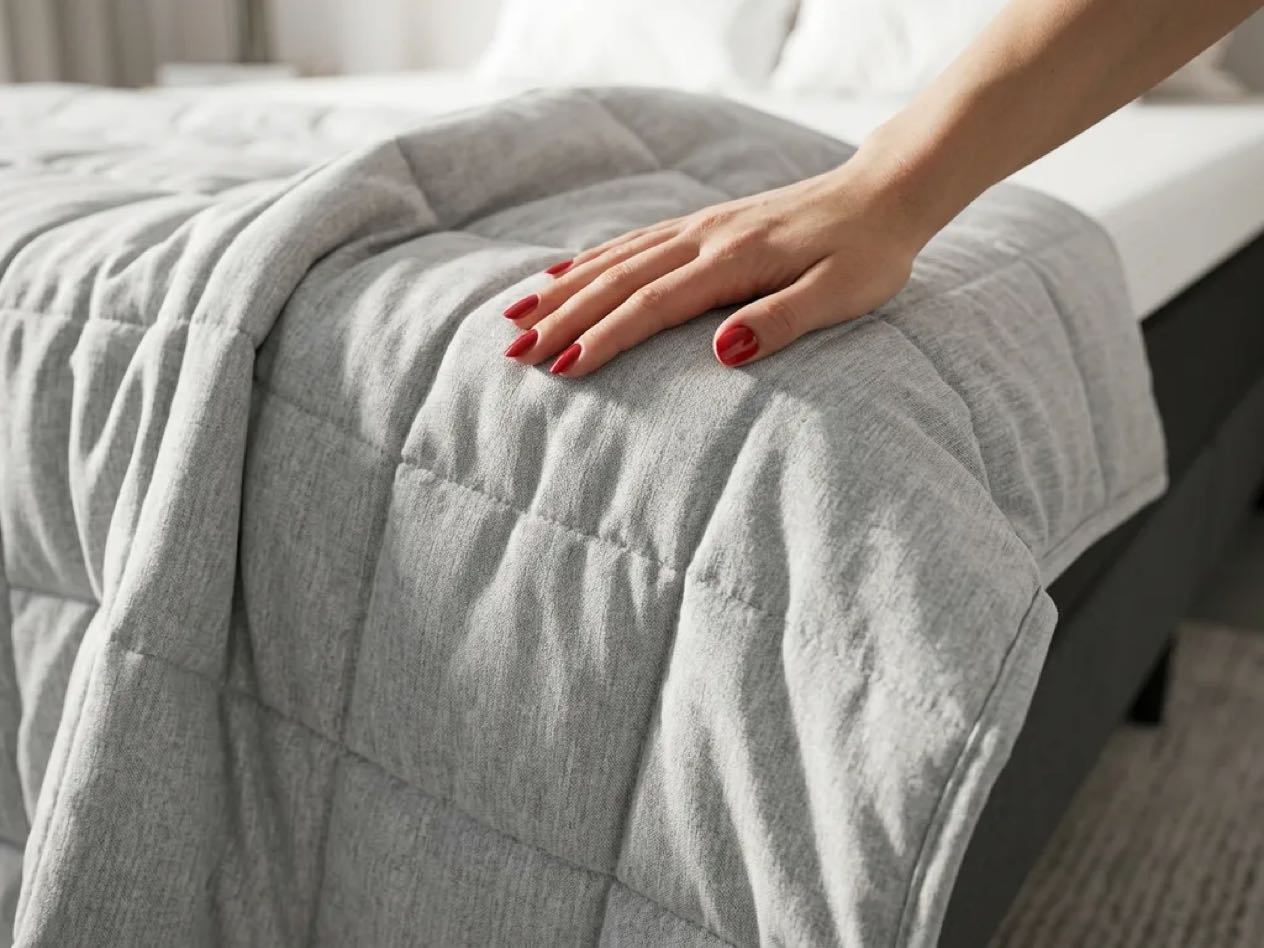
Emma Weighted Blanket
14 nightsGentle, even pressure some people find settling at lights-out — a comfort aid with mixed evidence, not a treatment.
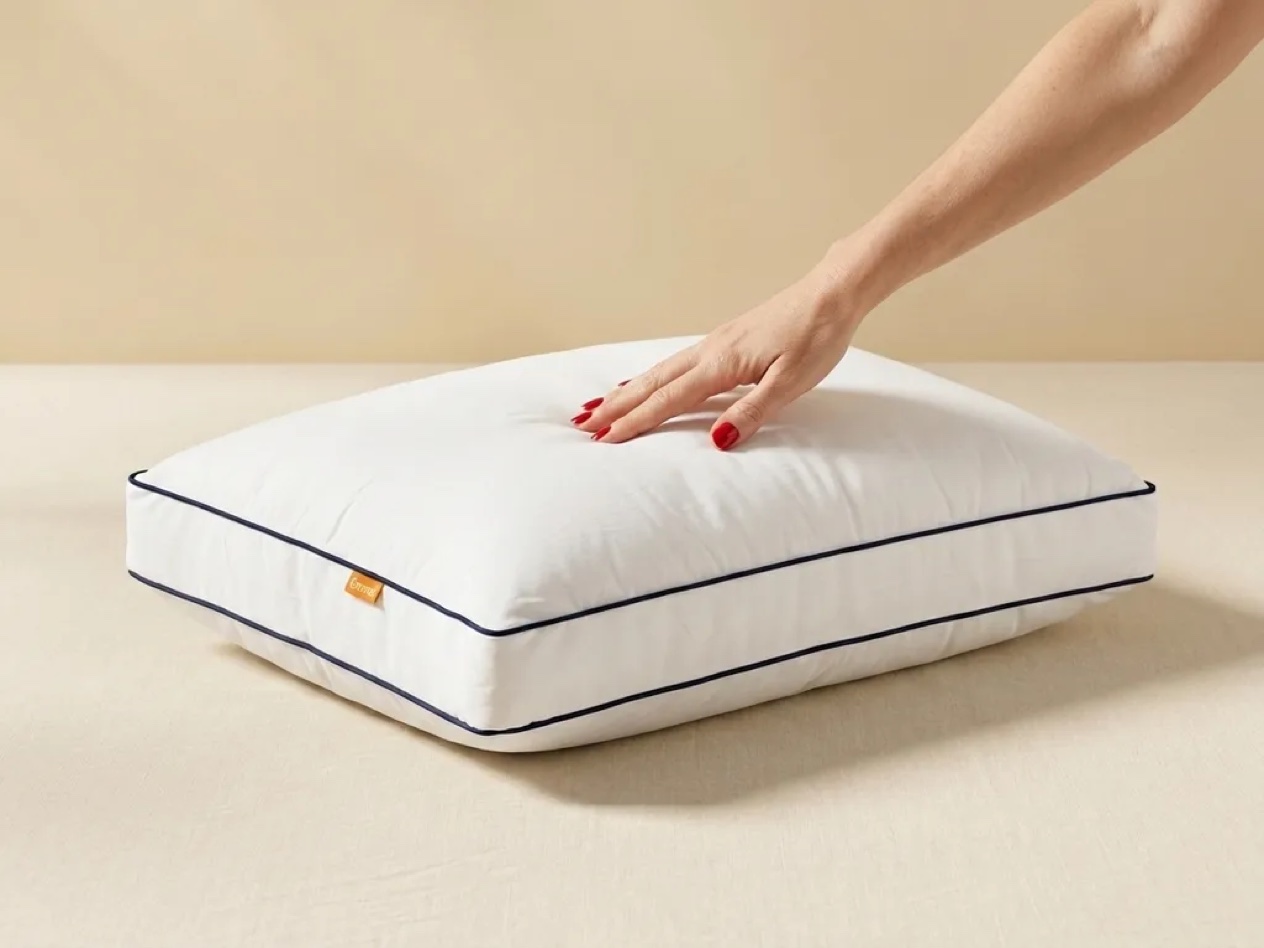
Emma Hybrid Pillow
50×70 cm · 30 nightsA flip soft-or-firm pillow rules out neck niggles as one more thing pulling you awake at night.
We may earn a commission if you buy through these links — it never affects our picks.
Frequently Asked Questions
Related Guides
Explore more sleep content to help you make the best choices.
Sleep & Anxiety: Why Your Mind Races at 3am
How worry fuels wakefulness — and calming techniques that actually work
Read moreWhy Am I Always Tired?
Still exhausted after a full night? The common causes to rule out
Read moreSleep Calculator
Work out your ideal bedtime from 90-minute sleep cycles
Read moreIdeal Bedroom Temperature
The temperature range that helps you fall — and stay — asleep
Read moreSleep Trackers, Tested
We wore the popular trackers to see which sleep data you can trust
Read moreBest Mattress Ireland
Our top-tested mattresses, if the bed turns out to be part of the problem
Read moreSources
- HSE — Insomnia (definition, self-help, when to see a GP, CBT-I and medication). View source
- HSE — SilverCloud guided digital CBT service. View source
- St Patrick's Mental Health Services — CBT-I programme. View source
- HSE Medicines Management Programme — Guidance on appropriate prescribing of benzodiazepines and Z-drugs (2021). View source