




Quick Summary
Choose Memory Foam if you:
- • Want maximum motion isolation (couples)
- • Prefer a hugging, contouring feel
- • Sleep on your side primarily
- • Have a tighter budget
Choose Hybrid if you:
- • Sleep hot and need better cooling
- • Want bounce and easier repositioning
- • Need strong edge support
- • Prefer a more traditional mattress feel
What is a Memory Foam Mattress?
Memory foam (viscoelastic polyurethane foam) was originally developed by NASA in the 1960s for aircraft cushioning. It responds to heat and pressure, moulding to your body shape and slowly returning to its original form when pressure is released.

Construction
A typical memory foam mattress has 2-4 layers:
- Comfort layer: 3-10cm of memory foam that contours to your body
- Transition layer: Often polyfoam to prevent you sinking too deep
- Support core: High-density polyfoam base (typically 15-20cm)
Advantages
- • Excellent pressure relief – Moulds to shoulders and hips
- • Superior motion isolation – Absorbs partner movement
- • Quiet – No springs to squeak
- • Hypoallergenic – Resistant to dust mites
- • More affordable – Generally lower price point
- • Lighter weight – Easier to move and rotate
Disadvantages
- • Heat retention – Can sleep warm despite cooling tech
- • Slow response – "Quicksand" feeling when moving
- • Weak edge support – May sag when sitting on edge
- • Off-gassing – Initial chemical smell (usually fades in days)
- • Less bounce – Not ideal for combination sleepers
What is a Hybrid Mattress?
Hybrid mattresses combine the pressure-relieving comfort of foam with the support and breathability of innerspring coils. They aim to offer "the best of both worlds" – contouring comfort without excessive heat retention.

Construction
A typical hybrid mattress has 3-5 layers:
- Comfort layer: 5-10cm of memory foam, latex, or polyfoam
- Transition layer: Polyfoam or microcoils for gradual support change
- Support core: Pocketed coils (individually wrapped springs) – usually 15-20cm
- Base layer: Thin foam to protect coils and add stability
Advantages
- • Better cooling – Air flows through coil layer
- • More bounce – Responsive, easier to move
- • Strong edge support – Stable sitting/sleeping at edges
- • Durable – Coils typically outlast foam cores
- • Familiar feel – Similar to traditional mattresses
- • Good for all positions – Versatile support
Disadvantages
- • More motion transfer – Coils can transmit movement
- • Heavier – Can weigh 30-50kg (harder to move)
- • More expensive – Complex construction costs more
- • Potential noise – Some coils can squeak over time
- • Harder delivery – May not compress as small
Head-to-Head Comparison
Based on industry testing across hundreds of mattresses, here's how the two types compare on average:
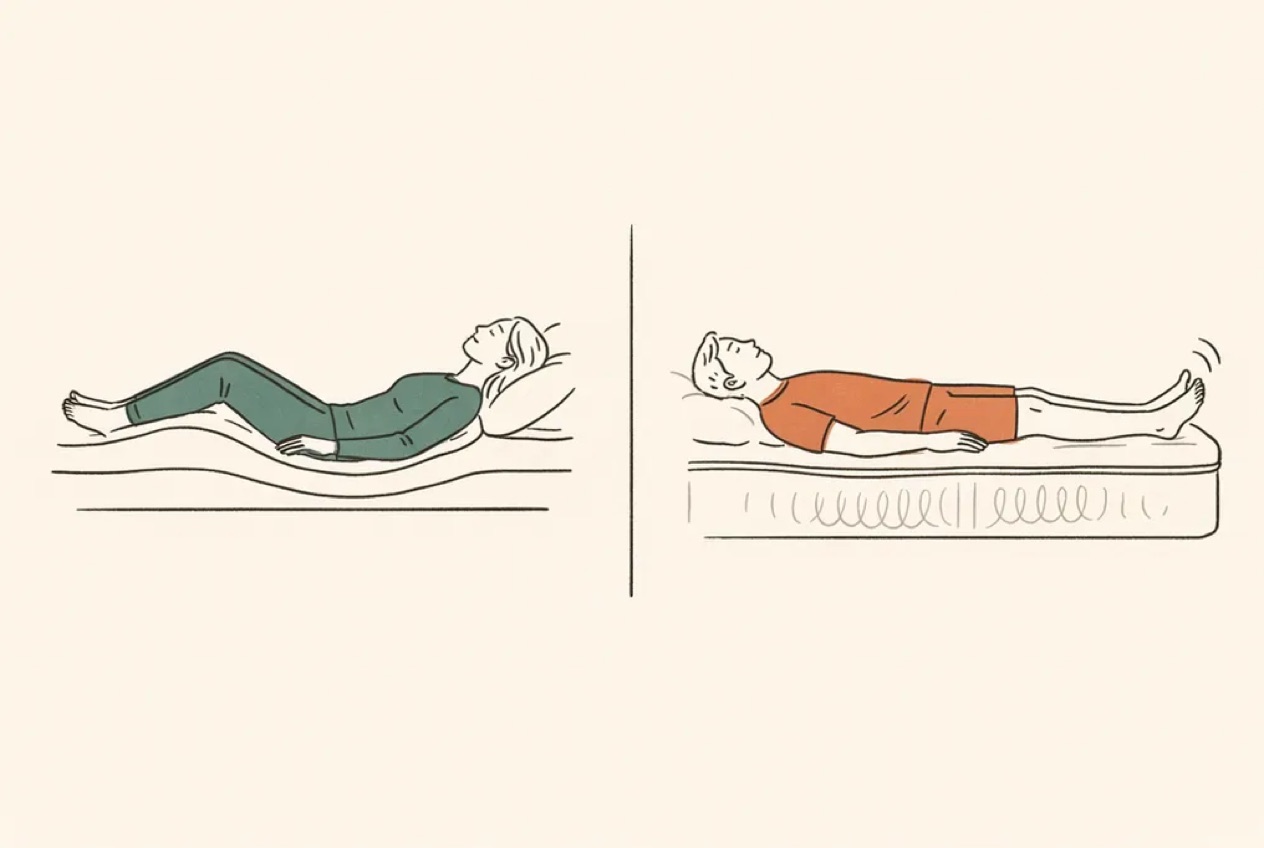
| Factor | Memory Foam | Hybrid | Notes |
|---|---|---|---|
| Cooling | Good (8.2/10) | Very Good (8.8/10) | Coils allow better airflow |
| Motion Isolation | Excellent | Good | Foam absorbs movement better |
| Bounce | Low (~6 inches) | High (~11 inches) | Coils provide spring |
| Edge Support | Fair | Good | Coils reinforce perimeter |
| Pressure Relief | Excellent | Excellent | Both perform well |
| Response Time | Slower | Faster | Easier to reposition |
| Durability | 6-8 years | 7-10 years | Coils add longevity |
| Weight | Lighter | Heavier | Easier to move/rotate |
| Price (Queen) | €400-€1,500 | €600-€2,000 | Generally more affordable |
| Noise | Silent | Minimal | No moving parts in foam |
Key Differences Explained
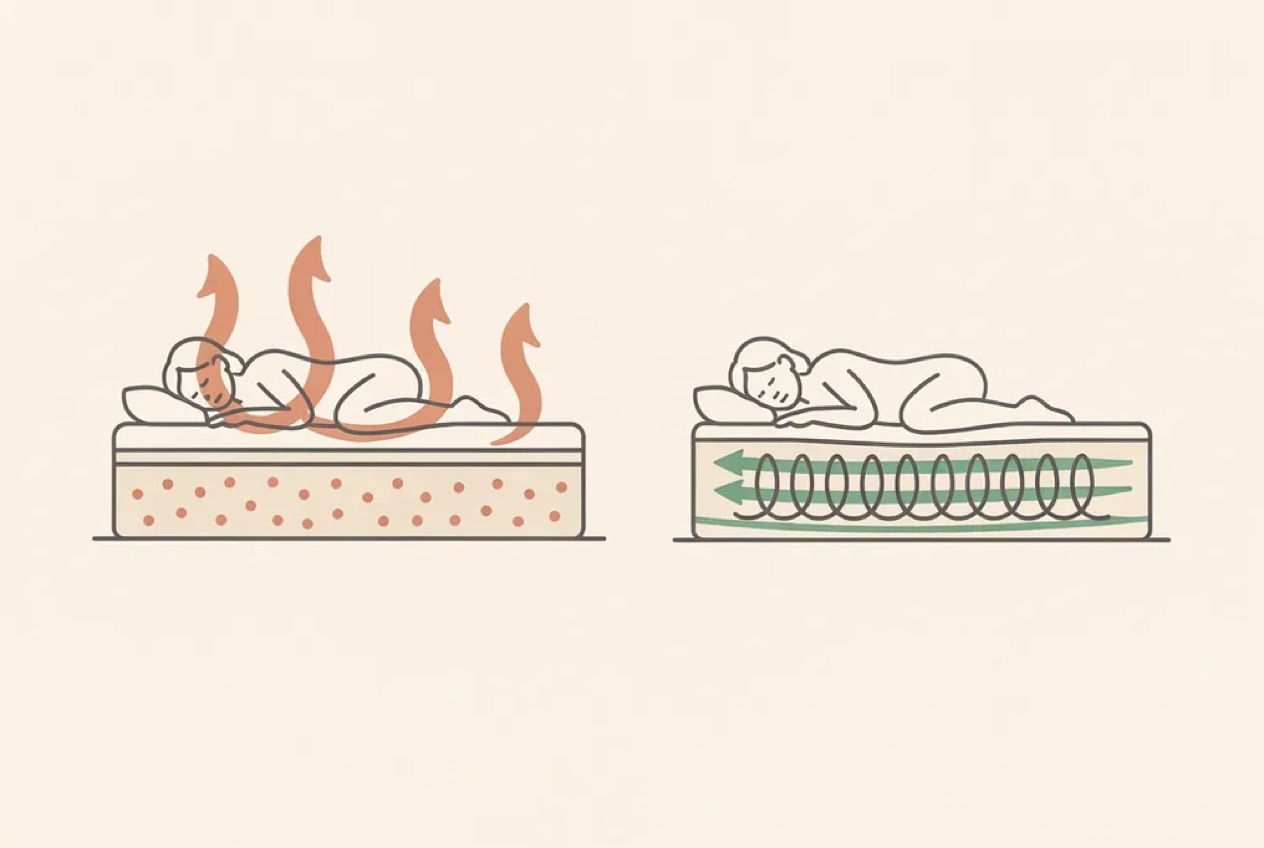
Temperature Regulation
Winner: Hybrid
Memory foam naturally retains body heat because it moulds closely to your body. While modern memory foam often includes cooling technologies (gel infusion, copper infusion, open-cell structure), it still tends to sleep warmer than hybrids. The coil layer in hybrids creates natural airflow channels that dissipate heat effectively.
For Irish climate: Ireland's mild, humid climate means overheating is less of a concern than in warmer countries. Memory foam performs well here, but hot sleepers should still consider hybrids or look for memory foam with advanced cooling features.
Motion Isolation
Winner: Memory Foam
Memory foam excels at absorbing movement, making it ideal for couples where one partner tosses and turns. The dense foam structure absorbs energy rather than transferring it across the mattress. While pocketed coils in hybrids reduce motion transfer compared to traditional innersprings, they still transmit more movement than all-foam designs.
For couples: If your partner frequently disturbs your sleep, memory foam is typically the better choice. However, premium hybrids with individually wrapped pocketed coils can also perform well.
Durability & Longevity
Winner: Hybrid
Quality hybrids typically last 7-10 years, while memory foam mattresses average 6-8 years. The steel coil support core in hybrids maintains its structure longer than polyfoam bases, which can develop permanent indentations over time. However, lower-quality hybrids with thin foam layers may wear faster in the comfort layer.
Best Choice by Sleep Position
Side Sleepers
Memory Foam Often BetterSide sleepers need pressure relief at the shoulders and hips. Memory foam's deep contouring excels here, cradling these pressure points effectively. Softer hybrids can work well too, but memory foam typically provides more targeted relief.
Back Sleepers
Either Works WellBack sleepers need support to maintain spinal alignment. Both types can work well – medium-firm options of either type will support the lumbar region while providing enough cushioning. Hybrids may offer slight edge for those who also sleep on their stomach sometimes.
Stomach Sleepers
Hybrid Often BetterStomach sleepers need a firmer surface to prevent the pelvis from sinking. Hybrids typically provide better support here due to their responsive coil base. Memory foam can work but should be on the firmer end to prevent excessive sinking.
Combination Sleepers
Hybrid Often BetterThose who change positions throughout the night benefit from hybrids' faster response and easier repositioning. Memory foam's slow response can make changing positions feel more effortful.
Considerations for Irish Homes

Climate & Temperature
Ireland's mild, temperate climate means extreme heat is rarely an issue. Memory foam's heat retention is less problematic here than in warmer countries. However, well-insulated modern homes with central heating can get warm at night, making hybrids preferable for those who run hot.
Humidity & Moisture
Ireland's higher humidity can affect mattress longevity. Hybrids' better airflow helps prevent moisture buildup, which can be beneficial. For memory foam, ensure good bedroom ventilation and consider a mattress protector to extend lifespan.
Delivery & Stairs
Many Irish homes have narrow stairs, making bed-in-a-box mattresses popular. Memory foam mattresses compress smaller and are lighter, making delivery easier. Hybrids can also be compressed but are heavier (30-50kg) and may expand slower.
Budget
Quality memory foam mattresses start around €400-500, while comparable hybrids typically start at €600-800. Both types are available from Irish retailers and online, with most offering trial periods and free delivery within Ireland.
Frequently Asked Questions
The Bottom Line
Both memory foam and hybrid mattresses can provide excellent sleep when matched to your needs. Memory foam offers superior motion isolation and pressure relief, making it ideal for side sleepers and couples where one partner moves frequently. Hybrids provide better cooling, bounce, and edge support, suiting hot sleepers, combination sleepers, and those who prefer a more responsive surface.
For most Irish sleepers, either type can work well given our moderate climate. Focus on getting the right firmness for your sleep position and body weight, then choose between foam and hybrid based on your temperature preferences and whether motion isolation or responsiveness matters more to you.
Related Guides
Explore more sleep content to help you make the best choices.
Mattress Layers Explained
What's inside each type — foams, springs, and build quality decoded
Read moreMattress Firmness Guide
Find the right support level for your sleep position and body weight
Read moreBest Cooling Mattress
Our top picks for hot sleepers, whichever construction you choose
Read moreBest Mattress in a Box
The top vacuum-packed foams and hybrids delivered to Irish doors
Read moreBest Mattress Ireland
Our overall top-rated mattresses — foam and hybrid — ranked
Read moreBest Beds in Ireland
Slatted and platform frames that actually support a hybrid
Read more