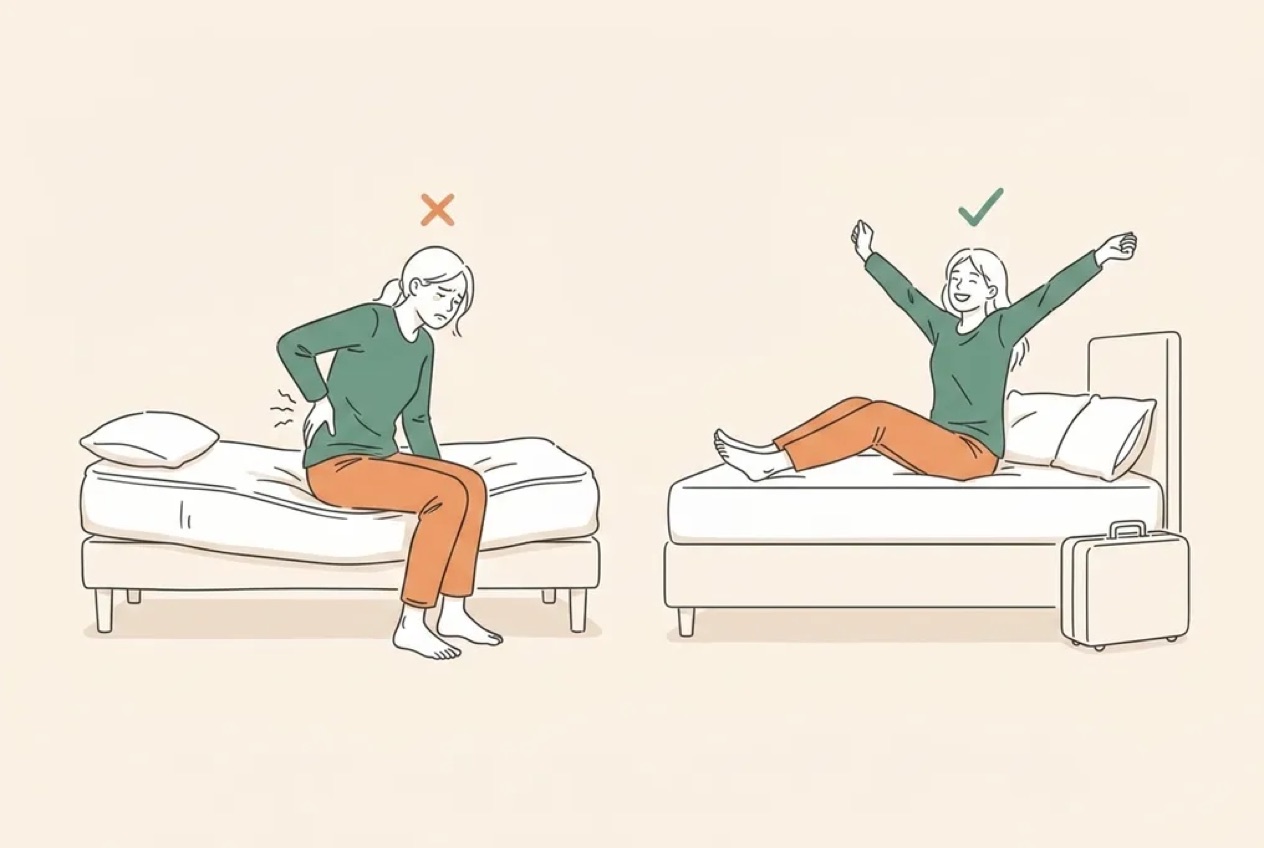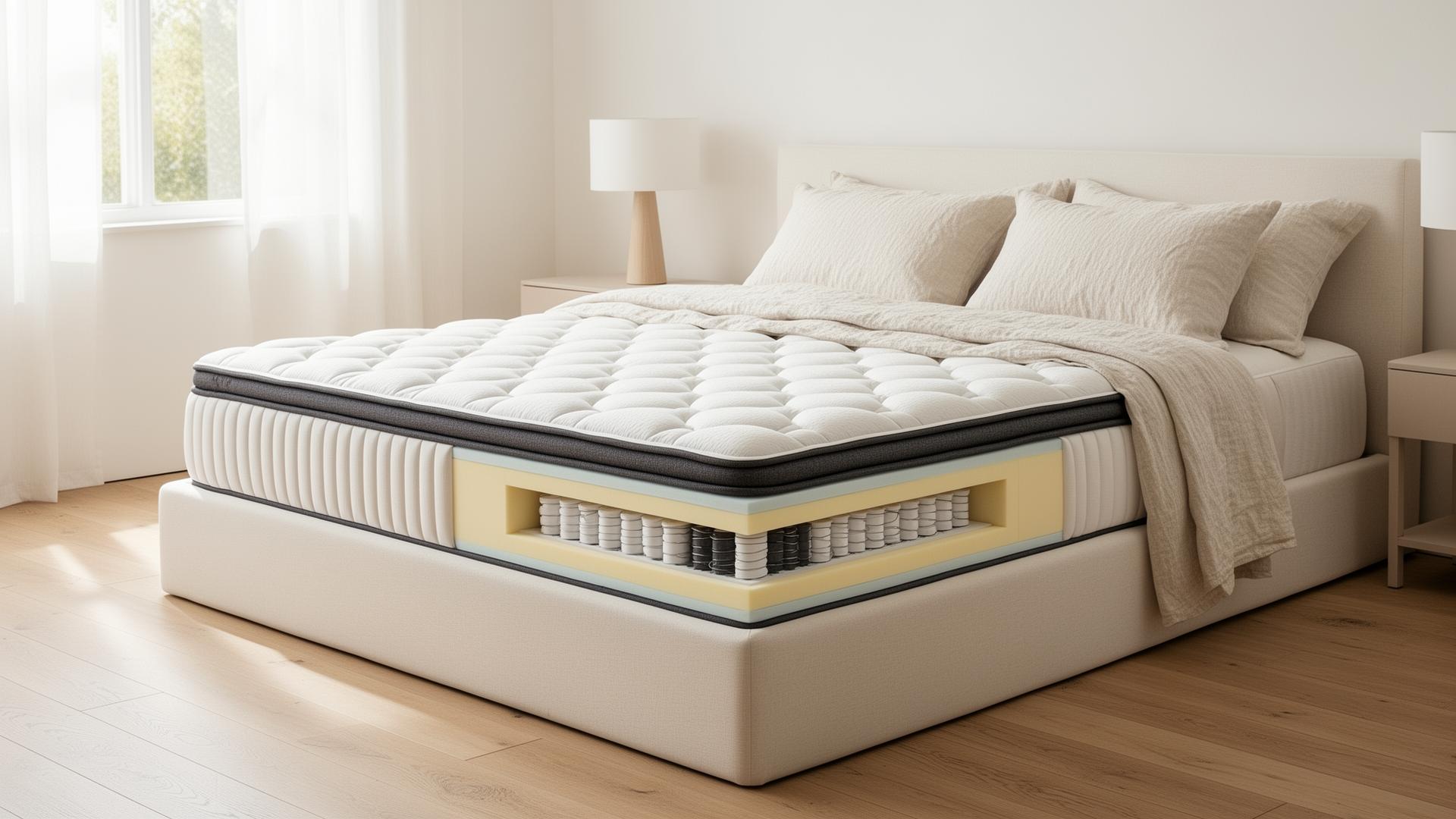





Premium mattress in a modern Irish bedroom
Updated January 2026

Best Mattress in Ireland (2026)

Top Picks for Irish Sleepers — from memory foam to hybrid options, with sizing notes for Irish beds, delivery policies, and trial periods.

Jump to our picks

Finding the right mattress in Ireland means considering factors unique to Irish homes — from room sizes in terraces and apartments to UK/Irish sizing differences, delivery to rural Eircodes, and typical trial periods ranging from 100 to 365 nights. Ireland's damp climate and cooler bedrooms also make proper support and temperature regulation essential for a good night's sleep.

Affiliate Disclosure: We may earn a commission when you purchase through links on this page. This doesn't affect our picks or editorial independence.

Why Your Mattress Choice Matters More Than You Think

You'll spend roughly a third of your life in bed — that's over 200,000 hours if you live to 80. Yet most people put more research into buying a smartphone than choosing where they'll sleep for the next decade. A poor mattress doesn't just mean uncomfortable nights; it can affect your back health, energy levels, mood, and even your relationship if you share a bed.

For Irish sleepers specifically, there are unique considerations that generic mattress guides miss entirely. Our homes tend to be smaller and cooler than American or Australian houses. Many of us live in terraced homes or apartments where narrow stairs make delivery tricky. And if you're outside Dublin, you've probably experienced the frustration of "delivery not available to your area" messages.

This guide exists because we got tired of reading mattress reviews written for Americans that recommend brands you can't even buy here. Every mattress in our picks delivers to Irish addresses, prices are in euros, and we've verified trial periods actually apply to customers in the Republic of Ireland.

What We Cover in This Guide

Honest Picks by Category

Not just "best overall" — we pick the best for side sleepers, hot sleepers, back pain, couples, and budget buyers. Different needs require different mattresses.

Irish Delivery Realities

We've checked which brands actually deliver outside Dublin, their timeframes for rural areas, and whether they'll take away your old mattress.

Practical Buying Guidance

How to choose firmness, which materials suit your sleep style, size compatibility with Irish bed frames, and mistakes to avoid.

Long-Term Ownership Tips

How to care for your mattress in Ireland's damp climate, when to rotate, and the signs it's time for a replacement.

A Quick Reality Check Before You Start

There's no single "best" mattress. Anyone who tells you otherwise is selling something. The right mattress depends on your body weight, sleep position, temperature preferences, whether you share a bed, any health conditions, and frankly, your budget.

Price doesn't always equal quality. Some €500 mattresses outperform €1,500 ones for certain sleepers. We've seen budget picks that last years and expensive ones that sag within months. What matters is whether the mattress suits your specific needs.

Trial periods exist for a reason. You can't know if a mattress truly works for you after lying on it for five minutes in a showroom. That's why we favour brands offering substantial trial periods — your body needs weeks to adjust and reveal whether something's working.

How to Choose the Right Mattress

Before looking at specific mattresses, understand what factors actually matter for your sleep. This isn't about finding the "best" mattress — it's about finding the right one for you.

The Six Factors That Actually Matter

Your Sleep Position

Side sleepers need cushioning for shoulders and hips — medium to medium-soft works best. Back sleepers need balanced support to maintain the spine's natural curve — medium to medium-firm is ideal. Stomach sleepers need firm support to prevent the lower back from arching.

Tip: If you switch positions during the night, medium firmness gives you the most flexibility.

Your Body Weight

Weight affects how deeply you sink into a mattress. Lighter sleepers (under 60kg) often find firm mattresses uncomfortably hard. Heavier sleepers (over 100kg) may sink too far into soft mattresses, losing support. Most ratings assume a 'typical' body weight of 60-90kg.

Tip: If you're heavier, look for mattresses with reinforced edges and zoned support.

Mattress Materials

Memory foam contours to your body and isolates motion but can sleep warm. Hybrids combine foam comfort with spring airflow and bounce. Latex is durable and naturally breathable but costs more. Pocket springs provide targeted support and excellent ventilation.

Tip: For Irish bedrooms, hybrids often work well — they balance comfort with breathability.

Temperature Regulation

Some people sleep hot regardless of the room temperature. Dense memory foam tends to trap heat, while open-cell foams and spring-based mattresses allow more airflow. Gel infusions and phase-change covers can help, but their effectiveness varies.

Tip: If you consistently throw off covers at night, prioritise cooling features.

Sharing a Bed

Couples need to consider motion isolation (so one person moving doesn't wake the other), edge support (so neither person feels like they're rolling off), and differing firmness preferences. Some brands offer split-firmness options for couples who can't agree.

Tip: Hybrids with individually wrapped pocket springs often excel at motion isolation.

Your Budget (Realistically)

A good quality double mattress in Ireland typically costs €400-€1,200. Under €300, you're likely sacrificing durability. Over €1,500, you're often paying for brand prestige or niche features. The sweet spot for most people is €500-€800 for a mattress that performs well and lasts.

Tip: Watch for sales — mattress brands run frequent promotions, especially around bank holidays.

Ireland-Specific Considerations

Delivery to Your Address

Many online mattress brands ship from the UK or mainland Europe. Delivery to Dublin is usually straightforward, but rural Eircodes can face longer waits or additional fees. Always check the brand's Irish delivery policy before ordering — some exclude certain areas entirely.

Trial Periods & Returns

Trial periods range from 100 to 365 nights. Crucially, check who pays for returns in Ireland — some brands offer free collection from Irish addresses, while others charge €50-€100 for return shipping. The trial is only useful if you can actually afford to use it.

A Note on Sizing

Ireland uses UK mattress sizes, which differ from European sizes. A UK Double is 135×190cm, while an EU Double is 140×200cm — not interchangeable. If you have an existing bed frame, measure it before ordering. Many Irish retailers let you choose between UK and EU sizing, but online-only brands may only stock one or the other.

Our 2026 Mattress Picks for Ireland

Hand-tested and researched — the best mattresses available to Irish sleepers right now.

💡 Select up to 3 mattresses to compare side-by-side

DreamCloud Premier HybridBest Overall

DreamCloud Premier Hybrid

Balanced support and pressure relief, great all-rounder for couples sharing a bed.

Why We Like It

  • Hybrid coil core provides excellent back support
  • Foam comfort layers offer relief for side sleepers
  • Outstanding motion isolation for shared beds
  • Reliable delivery across the Republic of Ireland

Best For

  • Mixed-position couples
  • Semi-detached/terrace homes

Not Ideal For

  • Very firm preference
  • Ultra-tight budgets

Key Specs

Firmness:Medium
Height:26 cm
Materials:Hybrid (Coils + Foam)
Trial:200 nights
Warranty:10 years
Price:€€€
See Price at DreamCloud
Emma Original MattressBest Value

Emma Original Mattress

Strong performance under €600 in double sizes — ideal for budget-conscious buyers.

Why We Like It

  • CertiPUR-certified foam stack for safety
  • Decent edge support despite the price
  • Easy stairs carry in Irish apartments
  • Quick delivery to all Eircodes

Best For

  • Budget buyers
  • Guest rooms
  • First-time buyers

Not Ideal For

  • Heavy sleepers (100+ kg)
  • Those wanting bounce

Key Specs

Firmness:Medium-Firm
Height:24 cm
Materials:All-Foam
Trial:100 nights
Warranty:5 years
Price:€€
See Price at Emma
Simba Hybrid ProBest for Side Sleepers

Simba Hybrid Pro

Plush top with standout pressure relief for shoulders and hips.

Why We Like It

  • Zoned foam adapts to body curves
  • Softer upper layer cushions pressure points
  • Excellent motion isolation
  • Titanium Aerocoil springs for support

Best For

  • Side sleepers under 95 kg
  • Couples
  • Light sleepers

Not Ideal For

  • Stomach sleepers
  • Those who prefer firm

Key Specs

Firmness:Medium-Soft
Height:28 cm
Materials:Foam + Hybrid
Trial:200 nights
Warranty:10 years
Price:€€€
See Price at Simba
Tempur BreezeBest Cooling

Tempur Breeze

Coil airflow and breathable cover keep hot sleepers cooler all night.

Why We Like It

  • Open coil design maximizes airflow
  • Phase-change cover actively cools
  • Optional latex comfort layer
  • Ideal for south-facing Irish bedrooms

Best For

  • Hot sleepers
  • South-facing rooms
  • Couples who overheat

Not Ideal For

  • Those on strict budgets
  • Very cold sleepers

Key Specs

Firmness:Medium
Height:27 cm
Materials:Hybrid
Trial:100–200 nights
Warranty:10 years
Price:€€€
See Price at Tempur
Silentnight Ortho SupportBest for Back Pain

Silentnight Ortho Support

Zoned support designed to maintain proper spinal alignment.

Why We Like It

  • Firmer lumbar zone prevents sinking
  • Robust edge support for easy getting in/out
  • Minimal sink even for heavier sleepers
  • Irish-owned brand with local support

Best For

  • Back/stomach sleepers
  • Heavier sleepers
  • Those with back issues

Not Ideal For

  • Side sleepers
  • Those who like soft beds

Key Specs

Firmness:Firm
Height:26–30 cm
Materials:Hybrid
Trial:200 nights
Warranty:10 years
Price:€€€–€€€€
See Price at Silentnight
Savoir No. 3Best Luxury

Savoir No. 3

Premium build and long trial period for a boutique hotel feel at home.

Why We Like It

  • Thick multi-layer comfort stack
  • Hand-finished edges and detailing
  • White-glove delivery in major counties
  • Customizable firmness options

Best For

  • Primary bedroom upgrades
  • Those who prioritize sleep quality

Not Ideal For

  • Budget-conscious buyers
  • Those who want quick delivery

Key Specs

Firmness:Medium
Height:30+ cm
Materials:Hybrid/Latex
Trial:365 nights
Warranty:15–25 years
Price:€€€€
See Price at Savoir
Nectar HybridBest Budget Hybrid

Nectar Hybrid

Affordable hybrid performance with springs and foam — ideal entry point for the hybrid experience.

Why We Like It

  • Pocket springs with memory foam comfort layer
  • Strong edge support for the price
  • 365-night trial — longest at this price point
  • Free delivery to all Irish addresses

Best For

  • First-time hybrid buyers
  • Those wanting springs + foam on a budget
  • Guest bedrooms

Not Ideal For

  • Ultra-soft seekers
  • Those wanting premium materials

Key Specs

Firmness:Medium-Firm
Height:25 cm
Materials:Hybrid (Springs + Foam)
Trial:365 nights
Warranty:Lifetime
Price:€€
See Price at Nectar

Understanding Mattress Types

Each mattress type has distinct characteristics. Understanding these helps you narrow down which category suits your sleep style before comparing specific models.

Memory Foam

Dense foam that moulds to your body shape, providing excellent pressure relief.

Pros

  • Outstanding pressure relief for joints
  • Excellent motion isolation for couples
  • Good for side sleepers
  • Typically more affordable

Cons

  • Can sleep hot and retain body heat
  • Less edge support — may feel like rolling off
  • Slow to respond to position changes
  • Can feel 'stuck' for some sleepers

Best for: Side sleepers, couples wanting motion isolation, those with joint pain

Ireland note: Works well in cooler Irish bedrooms, but consider gel-infused options if you tend to sleep warm.

Hybrid

Combines pocket springs with foam comfort layers for balanced performance.

Pros

  • Better airflow than all-foam
  • Stronger edge support
  • More responsive — easier to move around
  • Good balance of comfort and support

Cons

  • Usually heavier and harder to move
  • More expensive than all-foam options
  • May transfer some motion
  • Springs can potentially fail over time

Best for: Combination sleepers, those who want bounce, couples with different preferences

Ireland note: Popular choice for Irish homes — the breathability works well with our damp climate.

Latex

Natural or synthetic rubber that provides bouncy, responsive support.

Pros

  • Very durable — often lasts 15+ years
  • Naturally breathable and cool
  • Responsive and easy to move on
  • Hypoallergenic and mould-resistant

Cons

  • Most expensive option
  • Heavier than other types
  • Firmer feel — may not suit everyone
  • Limited options available in Ireland

Best for: Hot sleepers, eco-conscious buyers, those wanting longevity

Ireland note: Natural latex resists mould well — a genuine advantage in Ireland's humid climate.

Pocket Spring

Traditional spring construction with individually wrapped coils for targeted support.

Pros

  • Excellent breathability
  • Strong edge support
  • Familiar feel for traditional buyers
  • Often available from Irish retailers

Cons

  • Less pressure relief than foam
  • Motion transfer can be an issue
  • May develop squeaks over time
  • Comfort depends heavily on topper quality

Best for: Back and stomach sleepers, those who prefer firm support, traditional mattress buyers

Ireland note: Widely available from Irish furniture stores — easy to try in person before buying.

Firmness by Sleep Position

Your primary sleep position is the biggest factor in choosing firmness. Here's what works best.

Side Sleeper

Medium to Medium-Soft

Your shoulders and hips need to sink in slightly to maintain spinal alignment. A mattress that's too firm creates pressure points; too soft and you'll sink unevenly.

Back Sleeper

Medium to Medium-Firm

You need support under your lower back to prevent it from sinking, while still allowing your spine's natural curve. Avoid anything too soft or you'll wake with lower back ache.

Stomach Sleeper

Firm to Medium-Firm

Your hips are the heaviest part of your body and will sink into soft mattresses, causing your lower back to arch. Firm support keeps your spine neutral.

Combination Sleeper

Medium

If you switch positions during the night, a true medium firmness gives you the flexibility to sleep comfortably in any position without compromise.

Quick Decision Helper

Choose Memory Foam if...

You prioritise pressure relief, sleep with a partner who moves a lot, or have joint pain.

Choose Hybrid if...

You want bounce and airflow, change positions often, or need strong edge support.

Choose Pocket Spring if...

You prefer a traditional feel, sleep on your back or stomach, or want to try before buying.

Complete Sleep Position Guide

Your sleep position is the single most important factor in choosing mattress firmness. Here's everything you need to know about matching your mattress to how you actually sleep.

Side Sleeper

74% of people are primarily side sleepers

Ideal Firmness: Medium to Medium-Soft (4-6 out of 10)

Side sleeping is the most common position and generally considered healthy for digestion and reducing snoring. However, it creates pressure points at the shoulders and hips that require a mattress with good contouring.

What Your Mattress Needs

Pressure Relief

Your shoulders and hips bear most of your weight. Without adequate cushioning, you'll experience numbness, tingling, or pain.

Spinal Alignment

Your spine should form a straight line from neck to tailbone. Too firm and your hips won't sink enough; too soft and you'll sag in the middle.

Surface Softness

A plush comfort layer (at least 5cm of foam) allows your body to sink into the mattress rather than pressing against it.

Best Mattress Types
  • • Memory foam
  • • Soft hybrid
  • • Pillow-top
Types to Avoid
  • • Firm innerspring
  • • Extra-firm foam
  • • Traditional orthopaedic
Pillow Recommendation

Thick pillow to fill the gap between shoulder and head, keeping the neck aligned.

Common Mistakes
  • • Choosing a mattress that's too firm, leading to shoulder and hip pain
  • • Using a pillow that's too thin, causing neck strain

Back Sleeper

16% of people are primarily back sleepers

Ideal Firmness: Medium to Medium-Firm (5-7 out of 10)

Back sleeping distributes weight evenly and is often recommended for spinal health. The key challenge is supporting the lower back's natural curve without letting the hips sink too far.

What Your Mattress Needs

Lumbar Support

Your lower back has a natural inward curve. The mattress should fill this gap without pushing too hard or leaving it unsupported.

Even Support

Your weight should be distributed across the full length of your body, not concentrated at the heaviest points (hips, shoulders).

Moderate Contouring

You need some cushioning for comfort, but not so much that you sink deeply into the mattress.

Best Mattress Types
  • • Hybrid
  • • Latex
  • • Zoned support foam
Types to Avoid
  • • Ultra-plush
  • • Very soft memory foam
  • • Saggy older mattresses
Pillow Recommendation

Medium-loft pillow that supports the natural curve of the neck without pushing the head forward.

Common Mistakes
  • • Going too soft, which allows the hips to sink and strains the lower back
  • • Stacking multiple pillows, which pushes the chin toward the chest

Stomach Sleeper

7% of people are primarily stomach sleepers

Ideal Firmness: Firm to Medium-Firm (6-8 out of 10)

Stomach sleeping is generally considered the least ideal position for spinal health, as it tends to flatten the natural curve of the spine and strain the neck. However, if you naturally gravitate to this position, the right mattress can minimise problems.

What Your Mattress Needs

Firm Support

Your pelvis is the heaviest part of your body. A soft mattress allows it to sink, creating an uncomfortable arch in your lower back.

Flat Surface

Unlike side sleepers, you don't want to sink into the mattress. A flatter, more supportive surface keeps your spine neutral.

Responsive Feel

Stomach sleepers often shift positions. A responsive mattress (springs or latex) makes movement easier than slow-responding memory foam.

Best Mattress Types
  • • Firm hybrid
  • • Latex
  • • Firm innerspring
Types to Avoid
  • • Soft memory foam
  • • Pillow-top
  • • Ultra-plush
Pillow Recommendation

Thin, flat pillow or no pillow at all — anything thick will push the neck into an unnatural angle.

Common Mistakes
  • • Using a thick pillow, which strains the neck severely
  • • Choosing a soft mattress that allows the hips to sink

Combination Sleeper

~50% of people change positions during the night

Ideal Firmness: Medium (5-6 out of 10)

Most people don't stay in one position all night. If you regularly switch between back, side, and stomach positions, you need a mattress that performs reasonably well in all scenarios rather than excelling in one.

What Your Mattress Needs

Balanced Firmness

A true medium firmness (around 5-6 out of 10) provides enough cushioning for side sleeping while maintaining enough support for back and stomach positions.

Responsive Surface

You need to be able to roll over easily. Memory foam's slow response can feel like you're stuck; springs or latex respond instantly.

Consistent Performance

The mattress should feel comfortable regardless of which position you end up in during the night.

Best Mattress Types
  • • Hybrid
  • • Responsive foam
  • • Latex
Types to Avoid
  • • Dense memory foam
  • • Extreme soft or firm options
Pillow Recommendation

Adjustable-loft pillow that can be modified based on position, or a medium-loft compromise.

Common Mistakes
  • • Choosing a specialty mattress designed for one position
  • • Selecting slow-responding memory foam that hinders movement

How to Determine Your Sleep Position

Not sure which position describes you? Here are some ways to find out.

Ask Your Partner

If you share a bed, your partner likely knows what position you spend most of the night in — even if you're not aware of it yourself.

Note How You Wake Up

The position you wake up in most mornings is often your dominant sleep position. Pay attention for a week and look for patterns.

Check Your Pain Points

Shoulder or hip pain usually indicates side sleeping. Lower back pain can suggest stomach sleeping on a too-soft mattress. Neck pain often points to pillow problems.

10 Common Mattress Buying Mistakes to Avoid

Learning from others' mistakes can save you money, time, and years of poor sleep. Here are the pitfalls we see most often — and how to avoid them.

1
Common Mistake

Testing a mattress for only 5 minutes in a showroom

Why this is a problem:

Your body needs time to relax and reveal how a mattress truly feels. In a showroom, you're alert, possibly wearing street clothes, and lying in an unnatural position. What feels comfortable for 5 minutes may cause pain after 5 hours.

What to do instead:

If testing in-store, spend at least 15 minutes on each mattress you're seriously considering. Better yet, prioritise brands with generous home trials (100+ nights) so you can test in real sleeping conditions.

2
Common Mistake

Assuming 'firm' means 'supportive'

Why this is a problem:

Firmness and support are different things. A mattress can be soft yet supportive (proper zoning, quality materials), or firm yet unsupportive (cheap foam that doesn't distribute weight). Support means keeping your spine aligned; firmness is just how hard the surface feels.

What to do instead:

Focus on whether your spine stays aligned in your primary sleeping position. A side sleeper on a too-firm mattress will have poor spinal alignment despite the 'supportive' feel.

3
Common Mistake

Buying based on price alone — either too cheap or assuming expensive is best

Why this is a problem:

Under €300, most double mattresses cut corners on durability and will sag within 2-3 years. But spending €2,000+ often means paying for brand prestige rather than better sleep. The sweet spot exists, but it's not at the extremes.

What to do instead:

For a primary bed used nightly, budget €500-€1,000 for a quality double that will last 7-10 years. For guest rooms, €300-€500 is reasonable since use is infrequent.

4
Common Mistake

Ignoring your partner's needs if sharing a bed

Why this is a problem:

If one person likes soft and the other likes firm, compromise can mean both people sleep poorly. Motion isolation, edge support, and temperature regulation all affect both sleepers differently.

What to do instead:

Discuss priorities together before shopping. Consider brands that offer split-firmness options for king and super king sizes. At minimum, choose a mattress with good motion isolation so you don't disturb each other.

5
Common Mistake

Not checking the return policy details for Ireland specifically

Why this is a problem:

Many mattress brands advertise 100+ night trials, but the devil is in the details. Some charge €50-€100 for returns in Ireland. Others don't offer returns to Irish addresses at all, only to UK mainland. Some require the mattress to be in perfect, resellable condition.

What to do instead:

Before purchasing, specifically search for 'Ireland return policy' or contact customer service. Ask: Who pays return shipping? Is collection included? Are there any restocking fees?

6
Common Mistake

Choosing based on a single feature or marketing buzzword

Why this is a problem:

'Cooling technology', 'orthopaedic support', 'space-age foam' — these marketing terms often oversimplify or exaggerate actual benefits. No single feature makes a mattress right for everyone.

What to do instead:

Look at the full picture: materials, construction, firmness level, trial period, warranty, and verified customer reviews. A mattress with excellent reviews from people with similar sleep profiles to yours is worth more than any buzzword.

7
Common Mistake

Not considering your bed frame and room setup

Why this is a problem:

A mattress performs differently on different bases. A memory foam mattress on an old, sagging base will sag too. A heavy hybrid on weak slats may void your warranty. And getting a super king through a narrow Irish stairwell may be impossible.

What to do instead:

Check your bed frame type and slat spacing before ordering. Measure your stairwell if ordering a large mattress. Consider bed-in-a-box options for tricky access situations.

8
Common Mistake

Expecting immediate comfort from a new mattress

Why this is a problem:

Your body has adapted to your old mattress, even if it was wrong for you. A new mattress — even a perfectly suited one — takes 2-4 weeks for adjustment. Many people return mattresses prematurely during this period.

What to do instead:

Give any new mattress at least 30 nights before deciding. If you're still uncomfortable after 60 nights, then consider using the return policy. Early discomfort doesn't mean the mattress is wrong.

9
Common Mistake

Forgetting about the mattress protector

Why this is a problem:

A mattress without protection absorbs sweat, dead skin, dust mites, and (in Ireland's climate) moisture from the air. This voids many warranties and accelerates deterioration. It's also a hygiene issue.

What to do instead:

Budget €30-€60 for a waterproof, breathable mattress protector and put it on from day one. This is especially important in Ireland where dampness can lead to mould issues.

10
Common Mistake

Buying during a sale without doing prior research

Why this is a problem:

Mattress sales happen constantly — Black Friday, bank holidays, end of season. The 'urgency' is manufactured. If you buy impulsively during a sale without researching, you're likely to choose wrong.

What to do instead:

Do your research first, decide what you need, then wait for a sale on that specific mattress. Sales are great for saving money on a mattress you've already decided is right for you.

The Bottom Line

Most mattress buying mistakes come from rushing the decision, falling for marketing, or not checking the practical details. Take your time, do your research, verify the Irish-specific policies, and trust the trial period to reveal whether a mattress truly works for you. A few extra hours of research can mean years of better sleep.

Complete Mattress Sizing Guide for Ireland

Ireland uses UK mattress sizes, which differ from European sizes. Getting this wrong means a mattress that doesn't fit your frame — an expensive mistake. Here's everything you need to know.

UK/Irish Standard Sizes

These are the sizes used by most Irish bed frames and furniture stores.

Size NameDimensionsWidthNotesMin. Room Size
Single90 × 190 cm3ftStandard for children and single adults2.1m × 3m
Small Double (4ft)120 × 190 cm4ftCompact option for solo sleepers wanting more space2.4m × 3m
Double135 × 190 cm4ft 6inMost common size for couples in Ireland2.7m × 3.3m
King150 × 200 cm5ftExtra room for couples — 10cm longer than double3m × 3.6m
Super King180 × 200 cm6ftMaximum space — but check room and access3.6m × 3.9m

EU Size Differences

If you have a bed frame from IKEA or other European retailers, you may need EU sizing.

EU Single

90 × 200 cm

10cm longer than UK single

EU Double

140 × 200 cm

5cm wider, 10cm longer than UK double

EU King

160 × 200 cm

10cm wider than UK king

Important: Measure Your Frame

A UK Double (135×190cm) and EU Double (140×200cm) are NOT interchangeable. The EU mattress is 5cm wider and 10cm longer — it will hang over a UK frame or leave gaps. Always measure your bed frame's internal dimensions before ordering.

Room Planning for Irish Homes

Irish bedrooms tend to be smaller than in newer-build homes elsewhere. Many period terraces and apartments have bedrooms under 3m × 3m, which limits your mattress options. Here's how to plan properly.

Minimum Clearance Requirements

  • 60cm — minimum walking space beside the bed
  • 90cm — comfortable for getting dressed or opening wardrobes
  • 45cm — minimum for nightstands on each side
  • Door swing — ensure bed doesn't block the door opening

Quick Room Size Guide

  • Under 2.4m × 3m: Single only, with limited furniture space. Common in converted attics and box rooms.
  • 2.7m × 3m: Double fits, but tight. One nightstand only. Typical terraced house bedroom.
  • 3m × 3.6m: King fits comfortably with nightstands. Standard for semi-detached master bedrooms.
  • 3.6m × 4m+: Super King possible with full furniture. Larger detached homes or main bedroom suites.

Delivery Times by Region

  • Dublin & suburbs:2–5 working days
  • Cork, Galway, Limerick:3–7 working days
  • Other towns:5–10 working days
  • Rural Eircodes:7–14 working days
  • Northern Ireland:Varies — check policy

Note: Online-only brands often ship from the UK, adding 2-3 days compared to Irish-based retailers.

Getting the Mattress Upstairs

  • Measure stairwell width: Most mattresses need 75cm+ clear width
  • Check landing turns: Victorian terraces often have tight 90° turns
  • Bed-in-a-box advantage: Compressed mattresses fit through any door
  • Traditional mattresses: Can often be bent/flexed, but hybrids with springs are less flexible
  • Room of choice delivery: Some brands carry upstairs; others leave at door

What to Do With Your Old Mattress

Brand Take-Back

Many brands offer old mattress removal for €30-€50. Emma, DreamCloud, and others include this option at checkout. They'll take your old one when delivering the new.

Council Collection

Most councils offer bulky waste collection for €20-€40. You can also drop mattresses at civic amenity centres for free. Check your local council website for booking.

Retailer Recycling

IKEA offers free mattress take-back with any mattress purchase. Some Irish furniture stores have similar programs. Always ask when ordering.

Complete Mattress Care Guide for Irish Homes

Proper care extends your mattress life by years and keeps your sleep environment healthy. Here's everything you need to know, with specific advice for Ireland's climate.

Setup & Ongoing Care

Unboxing Your New Mattress

In smaller Irish hallways, unbox the mattress directly in the bedroom. Allow 24-72 hours for full expansion — some mattresses take longer in cooler rooms. Don't sleep on it until fully expanded.

Pro tip: Keep the packaging until you've decided to keep the mattress — you'll need it if returning.

Managing Off-Gassing

New foam mattresses emit a 'new mattress smell' from volatile organic compounds (VOCs). This is normal and not harmful, but can take 3-7 days to fully dissipate.

Pro tip: Open windows for a few hours each day, even in winter. In summer, consider leaving the mattress in an unused room for the first week.

Rotation Schedule

Rotate your mattress 180° every 3 months to ensure even wear. This means the head becomes the foot and vice versa. Most modern mattresses are one-sided and don't need flipping.

Pro tip: Set calendar reminders at the start of each season — spring, summer, autumn, winter — to prompt rotation.

Mattress Protection

A waterproof, breathable mattress protector is essential — not optional. It protects against spills, sweat, dust mites, and moisture from Ireland's humid air. Most warranty claims require a protector.

Pro tip: Spend €40-€60 on a quality protector. Cheap ones are noisy and don't breathe well. Replace every 2-3 years.

Seasonal Care Calendar

Each season brings different challenges for mattress care in Ireland. Follow this calendar to stay on top of maintenance.

Spring

  • Deep clean the mattress surface with a vacuum
  • Wash all bedding including pillows and protector
  • Check for signs of dust mites or allergens
  • Rotate the mattress 180°
  • Air out the mattress on a dry day (remove sheets, open windows)

Summer

  • Switch to breathable, lighter bedding
  • Consider a cooling mattress topper if sleeping hot
  • Rotate the mattress 180°
  • On warm dry days, strip the bed and let it air for several hours
  • Check that your protector is still waterproof — summer sweating tests it

Autumn

  • Rotate the mattress 180°
  • Check for any moisture issues before heating season begins
  • Inspect the mattress for wear, sagging, or damage
  • Switch back to warmer bedding
  • Ensure adequate bedroom ventilation for the coming damp months

Winter

  • Rotate the mattress 180°
  • Use a dehumidifier or ensure ventilation to prevent moisture buildup
  • Leave bedroom door open during the day for air circulation
  • Avoid putting the mattress directly against cold external walls
  • Check under the bed for signs of condensation or mould

Ireland-Specific Climate Challenges

Our damp Atlantic climate creates unique challenges for mattress care that guides written for drier climates don't address.

Moisture & Mould Prevention

Ireland's damp climate creates genuine risks for mattress hygiene. Moisture from humidity, condensation, and body sweat can accumulate in mattresses, leading to mould growth, dust mites, and odours.

What to do:
  • Use a breathable waterproof protector — not plastic sheeting
  • Ensure airflow under the bed (avoid solid divan bases without ventilation)
  • Open windows for 10-15 minutes daily, even in winter
  • Use a slatted bed base with gaps of at least 5cm
  • Consider a bedroom dehumidifier if your room consistently feels damp
  • Never make the bed immediately after waking — let it air for 30 minutes

Dust Mites & Allergens

Dust mites thrive in warm, humid environments and feed on dead skin cells. They're present in all homes but can be controlled with proper mattress care.

What to do:
  • Wash bedding weekly at 60°C to kill dust mites
  • Vacuum the mattress surface monthly with an upholstery attachment
  • Use anti-allergy mattress protectors and pillow covers
  • Keep bedroom humidity below 50% if possible
  • Consider professional mattress cleaning every 1-2 years for allergy sufferers

Temperature in Irish Bedrooms

Irish bedrooms are often cooler than ideal (16-19°C is optimal for sleep). This affects mattress feel — memory foam feels firmer in cold rooms, while spring mattresses maintain consistent firmness.

What to do:
  • If your memory foam feels too firm in winter, it may need time to warm up
  • Consider a mattress topper for added insulation and comfort
  • Layer bedding rather than relying on one heavy duvet
  • Don't overheat the bedroom — 16-19°C is actually ideal for sleep

Quick Reference: Care Timeline

Weekly

Wash sheets and air the bed

Monthly

Vacuum mattress surface

Every 3 Months

Rotate 180° and deep clean

Annually

Full inspection and protector replacement check

When to Replace Your Mattress

Most people keep mattresses far too long. Here's how to know when it's time for a new one — and what to expect from different mattress types.

Definite Signs You Need a New Mattress

If you notice any of these, replacement should be a priority — not optional.

Visible sagging of 3cm or more

If you can see a body-shaped depression where you sleep, the support layers have permanently compressed. No amount of rotation will fix this.

Springs you can feel through the surface

When springs poke through or create pressure points, the comfort layers have worn away. This will only get worse.

Waking with pain that improves during the day

If you consistently wake stiff and sore but feel better by afternoon, your mattress is likely causing or worsening the problem.

Visible mould, tears, or structural damage

These are hygiene and safety issues. A damaged mattress cannot be effectively cleaned or repaired.

Possible Signs It's Time to Consider Replacement

These suggest your mattress may be declining, but evaluate based on your situation.

The mattress is over 7-8 years old

Even if it seems fine, materials degrade. Most people don't notice gradual decline until they sleep on a new mattress.

You sleep better in hotels or at friends' houses

This is a clear signal that a different mattress works better for your body than what you have at home.

Increased allergy symptoms in bed

Dust mites, dead skin, and other allergens accumulate over years. If cleaning doesn't help, replacement might.

Rolling towards the centre when sharing

This indicates the centre has sagged more than the edges — common in aging mattresses regularly shared.

You can feel your partner's movements more than before

Declining motion isolation means the support layers have lost their effectiveness.

Expected Mattress Lifespan by Type

These are estimates assuming regular use (5-8 hours nightly) with proper care. Guest room mattresses typically last longer; heavier sleepers may see shorter lifespans.

Mattress TypeExpected LifespanNotes
Budget all-foam (under €400)3-5 yearsLower-density foams compress faster. Guest room use can extend this.
Quality memory foam6-8 yearsHigher-density foam lasts longer. Hot sleepers may see faster degradation.
Mid-range hybrid7-10 yearsSprings typically outlast foam. The foam comfort layers usually fail first.
Premium hybrid10-12 yearsBetter materials and construction. Proper care essential for maximum lifespan.
Natural latex12-20 yearsMost durable option. Can last decades with proper care. Covers may need replacing.
Traditional pocket spring8-10 yearsSprings are durable; the padding and fabric covering typically wear first.

Factors That Shorten Mattress Life

  • Higher body weight (100kg+ per sleeper)
  • Not using a mattress protector
  • Never rotating the mattress
  • High humidity without ventilation (common in Ireland)
  • Using an unsuitable or broken bed base
  • Sitting on the same edge daily
  • Allowing children to jump on the bed

Factors That Extend Mattress Life

  • Using a quality breathable protector from day one
  • Rotating 180° every 3 months
  • Ensuring good airflow under the bed
  • Regular airing (stripping the bed, opening windows)
  • Using a solid, appropriate bed base
  • Light to average body weight
  • Using it for sleep only (not home office seating)

The Bottom Line

Don't wait until your mattress is obviously ruined. Most decline is gradual — you adapt to worsening sleep quality without realising. If your mattress is over 7 years old and you can't remember the last time you slept truly well, it's worth investigating. Poor sleep affects everything: energy, mood, health, and productivity. The cost of a new mattress is minor compared to years of suboptimal rest.

Frequently Asked Questions

Real questions from Irish mattress shoppers, answered in detail. Click any question to expand.

Buying & Ordering

Delivery & Setup

Technical Questions

Care & Maintenance

Lifespan & Replacement

Still Have Questions?

If your question isn't covered here, check our detailed guides above or contact us. We're always happy to help Irish shoppers make informed decisions.

How We Research & Test Mattresses

Transparency matters. Here's exactly how we evaluate mattresses and compile our recommendations for Irish sleepers.

Research & Identification

We identify mattresses available to Irish customers by surveying online retailers, Irish furniture stores, and direct-to-consumer brands that ship to Ireland. We exclude brands that don't deliver here or have poor Irish availability.

Specification Analysis

We document construction details, materials, firmness ratings, and certifications for each mattress. We verify claims against independent testing data where available (e.g., CertiPUR-US certification, OEKO-TEX standards).

User Feedback Aggregation

We analyse reviews from Irish customers across multiple platforms (Trustpilot, Google Reviews, retailer sites). We weight recent reviews more heavily and look for patterns in both positive and negative feedback.

Policy Verification

We contact brands directly to verify Irish-specific policies: delivery times by region, return process for Irish addresses, who pays return shipping, warranty terms, and any Ireland-specific exclusions.

Ongoing Updates

We review and update this guide monthly. Prices change, models are discontinued, and new options become available. Our 'Updated' date reflects our most recent comprehensive review.

Our Commitment to Transparency

  • We don't accept payment for placement. Our picks are editorial, not paid placements.
  • Some links are affiliate links — we may earn a commission if you purchase, at no extra cost to you.
  • Affiliate relationships don't influence our rankings. We recommend what we believe is genuinely best.
  • We disclose when we haven't personally tested a product and rely on aggregated user feedback.
  • We acknowledge limitations: no guide can account for individual body types, preferences, and conditions.

Honest Limitations

No review methodology is perfect. Here's what we can't do and how we try to address it.

Personal testing isn't possible for every mattress

How we address it: We rely on aggregated user feedback and verified specifications, prioritising Irish customer experiences.

Mattress performance varies by individual

How we address it: We emphasise that trial periods are essential and encourage readers to use them fully before deciding.

Prices and availability change frequently

How we address it: We update monthly and note when prices are checked. Always verify current pricing before purchasing.

Reviews can be manipulated or biased

How we address it: We aggregate from multiple sources, weight verified purchases, and look for consistent patterns across platforms.

This guide was last comprehensively reviewed and updated in January 2026.

We verify prices, availability, and policies monthly. If you notice any outdated information, please let us know.