




The Anatomy of a Mattress
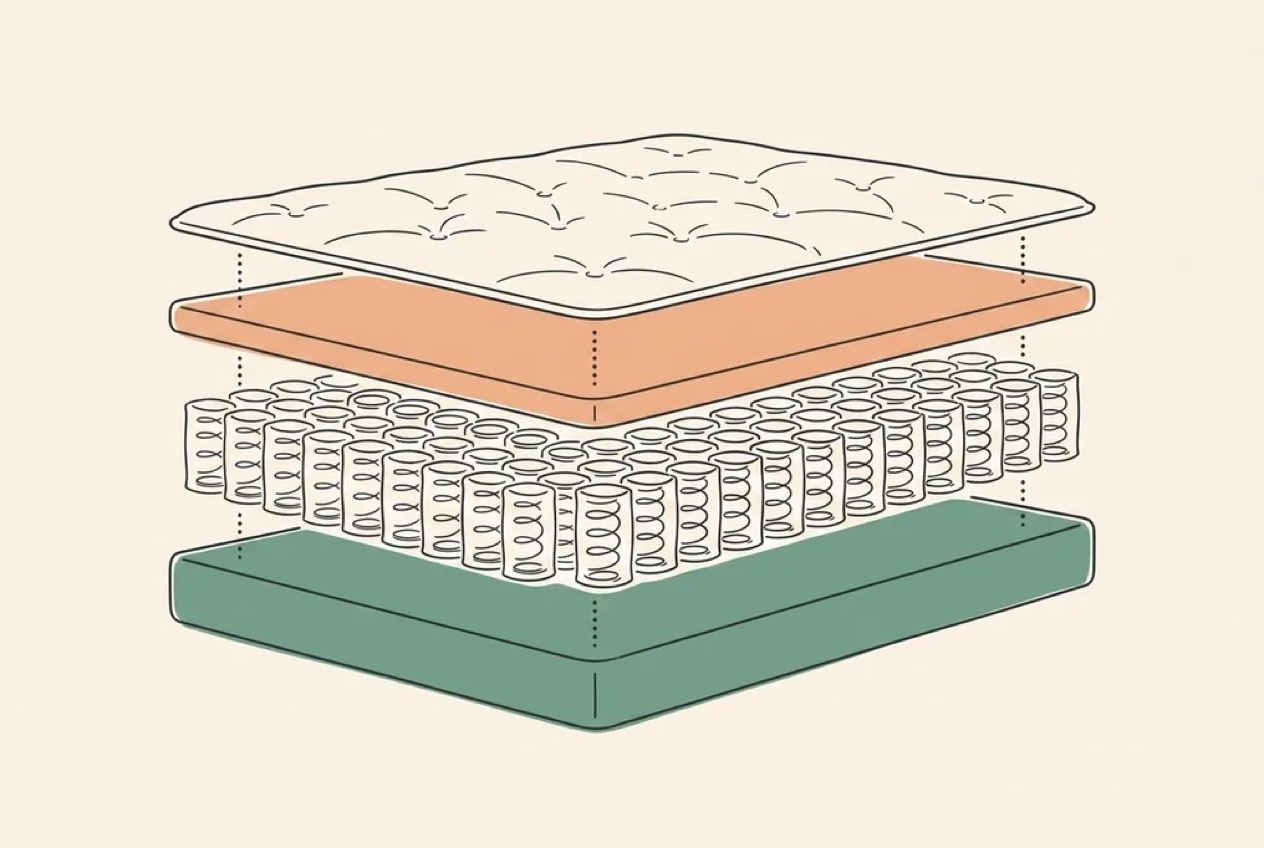
Cover / Ticking
The outer fabric layer. Look for breathable materials like cotton, Tencel, or wool blends. Quilted covers add softness; stretch knits enhance contouring.
Comfort Layer(s)
The top foam layers you feel most directly. Provides cushioning, pressure relief, and initial softness. Usually memory foam, latex, or soft polyfoam. Thickness: 3-10cm.
Transition Layer
A medium-firm layer between comfort and support. Prevents you from "bottoming out" into the firm core. Often firmer polyfoam or latex. Thickness: 2-5cm.
Support Core
The foundation providing structural support and spinal alignment. Either high-density foam (all-foam mattresses) or pocket springs/coils (hybrids/innersprings). Usually 15-20cm thick.
Comfort vs Support: What's the Difference?
These terms are often confused, but understanding the distinction is crucial for choosing the right mattress:

Comfort
What you feel when you first lie down. Comfort layers cushion pressure points (shoulders, hips, knees) and determine the initial soft or firm sensation.
- • Affects pressure relief
- • Creates the "feel" of the mattress
- • Located in top 5-10cm
- • Softer materials (memory foam, soft latex)
Support
How the mattress maintains spinal alignment throughout the night. Support comes from the core and prevents sagging in heavier body areas.
- • Keeps spine neutrally aligned
- • Prevents excessive sinking
- • Located in bottom 15-20cm
- • Firmer materials (springs, HD foam)
Key Insight: A mattress can feel soft (high comfort) while still being supportive, and vice versa. Many people mistakenly believe "firm = supportive"—but a too-firm mattress can actually create pressure points and misalignment. The best mattresses balance both.
Foam Types Explained
Understanding foam types helps you decode mattress specifications and compare quality:

Memory Foam (Viscoelastic)
Conforms closely to body shape, excellent pressure relief. Temperature-sensitive—softens with heat.
Pros
- ✓Superior pressure relief
- ✓Motion isolation
- ✓Contouring support
Cons
- ✗Can sleep hot
- ✗Slower response time
- ✗Initial off-gassing odour
Best for: Side sleepers, couples, those with joint pain
Latex (Natural or Synthetic)
Bouncy, responsive foam made from rubber tree sap (natural) or petroleum (synthetic). Naturally cooling.
Pros
- ✓Naturally breathable
- ✓Durable (12-15 years)
- ✓Responsive bounce
- ✓Hypoallergenic
Cons
- ✗More expensive
- ✗Heavier to move
- ✗Less contouring than memory foam
Best for: Hot sleepers, eco-conscious buyers, those wanting bounce
Polyfoam (Polyurethane)
Versatile, affordable foam used in comfort and transition layers. Quality varies significantly.
Pros
- ✓Cost-effective
- ✓Lightweight
- ✓Good base layer support
Cons
- ✗Lower grades wear quickly
- ✗Can off-gas
- ✗Less pressure relief than memory foam
Best for: Budget mattresses, transition layers, support foam
Gel-Infused Foam
Memory or polyfoam infused with gel beads or swirled gel for temperature regulation.
Pros
- ✓Cooler than standard memory foam
- ✓Good pressure relief
- ✓Maintains contouring
Cons
- ✗Cooling effect diminishes over time
- ✗Marketing can exaggerate benefits
Best for: Hot sleepers who want memory foam feel
Spring & Coil Systems
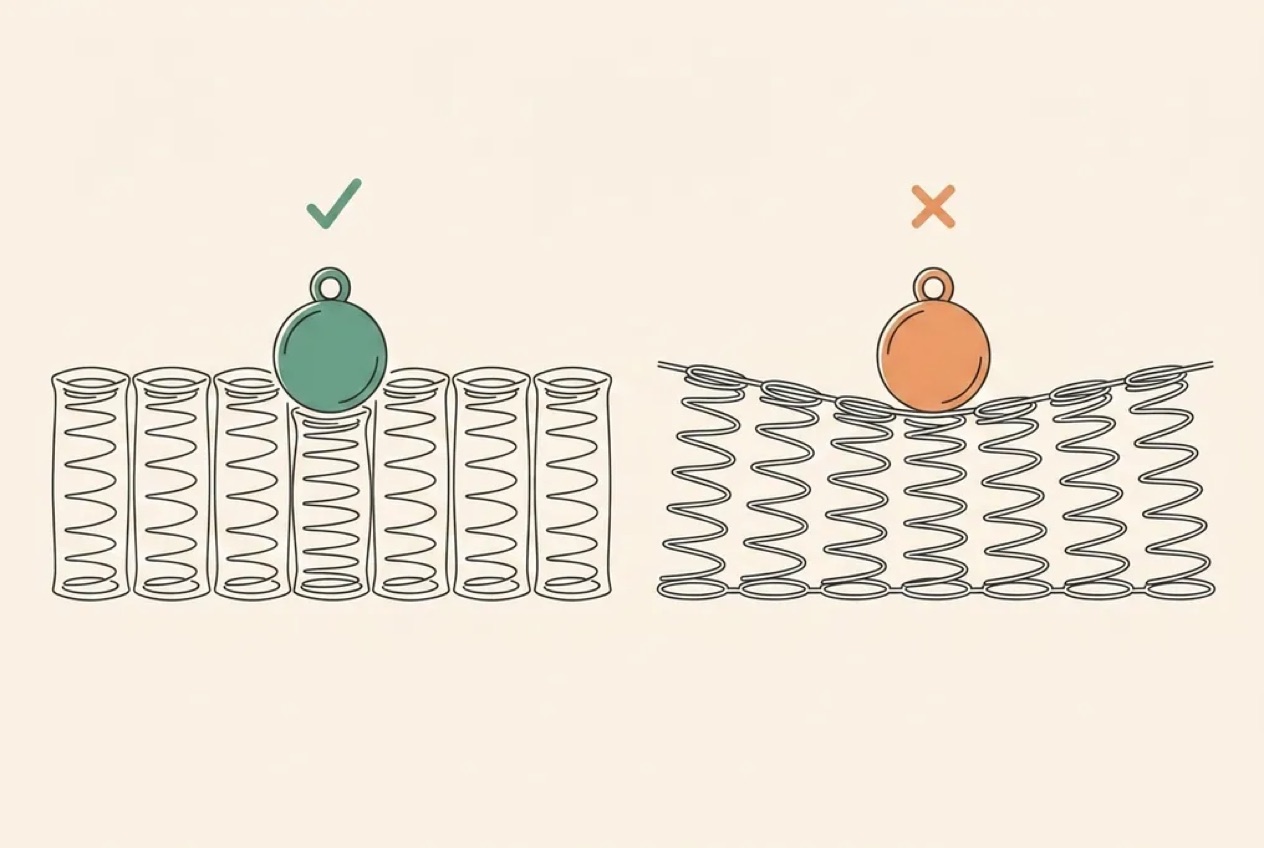
For hybrid and innerspring mattresses, the coil system forms the support core. Here's how different types compare:
| Coil Type | Support | Durability | Motion Isolation |
|---|---|---|---|
Bonnell Coils Hourglass-shaped interconnected springs. Traditional, affordable, but transfers motion. | Firm, uniform support | 3-5 years | Poor isolation |
Offset Coils Hinged design that contours better than Bonnell. Quieter with less motion transfer. | Good contouring | 5-7 years | Moderate isolation |
Continuous Coils Single wire formed into rows. Very durable but transfers motion across the surface. | Consistent, firm | 7-10 years | Poor isolation |
Pocket Springs (Marshall Coils) Individual springs wrapped in fabric pockets. Gold standard for hybrids and premium innersprings. | Targeted, zoned support | 8-12 years | Excellent isolation |
Coil Count: Higher isn't always better. A 1000-coil mattress with quality steel can outperform a 2000-coil mattress with thin wire. Focus on coil gauge (thickness) and type over raw count. Look for 12-14 gauge coils for durability.
Decoding Foam Density
Foam density is measured in kg/m³ (or PCF in the US). Higher density generally means better durability and support, but not necessarily firmer feel:

Low Density
< 40 kg/m³
Budget foams. May indent within 2-3 years. Acceptable for transition layers but avoid in comfort layers.
Medium Density
40-60 kg/m³
Good quality. Should last 5-7 years. Standard for mid-range mattresses and decent memory foam.
High Density
> 60 kg/m³
Premium quality. Lasts 8-10+ years. Found in high-end memory foam and support layers.
What to Look For in Quality Construction
Published Foam Densities
Reputable brands list specific densities (e.g., "55 kg/m³ memory foam"). Vague terms like "high-density" without numbers are red flags.
Clear Layer Descriptions
Look for specifications showing each layer's material, thickness, and purpose. Avoid mattresses with vague "proprietary foam" claims.
Appropriate Total Height
Most adults do well with 25-30cm mattresses. Under 20cm may lack adequate support; over 35cm is often unnecessary padding.
Certifications
Look for CertiPUR-US (foam safety), OEKO-TEX (textile safety), or GOLS/GOTS (organic latex/textiles). These indicate quality standards.
Considerations for Irish Buyers
Temperature Regulation
Ireland's cooler bedrooms mean overheating is less common than in warmer climates. Standard memory foam often works well here without needing expensive cooling gels. However, if you naturally sleep hot, consider latex or pocket spring hybrids for better airflow.
Humidity & Materials
Ireland's damp climate makes breathable materials more important. Natural latex and pocket springs allow better airflow than solid foam blocks. If choosing an all-foam mattress, ensure it has ventilation channels or open-cell foam structure.
Frequently Asked Questions
The Bottom Line
Understanding mattress layers gives you the knowledge to see past marketing hype. When comparing mattresses, focus on:
- Comfort layer quality: Memory foam 50+ kg/m³, latex with clear ILD ratings
- Support core construction: Pocket springs for hybrids, high-density foam (40+ kg/m³) for all-foam
- Total balance: Adequate comfort for pressure relief, firm support core for alignment
- Transparency: Brands that publish specifications are usually more trustworthy
Related Guides
Explore more sleep content to help you make the best choices.
Hybrid vs Memory Foam
Springs-plus-foam or all-foam — which construction suits you best?
Read moreMattress Firmness Guide
Match comfort layers to your sleep position and body weight
Read moreHow Long Do Mattresses Last?
How foam density and coil quality translate into years of use
Read moreMattress Buying Guide
Put your layer knowledge to work with a step-by-step buying plan
Read moreBest Mattress Ireland
Our top-rated picks with quality construction at every budget
Read moreHow We Test Mattresses
The checks we run on foams, springs, and build quality
Read more