




A note on health advice: This guide is for general information only and is not medical advice. Sleep problems can have many causes. If poor sleep is affecting your daily life, lasts more than a few weeks, or you suspect a condition such as insomnia or sleep apnoea, speak to your GP. In Ireland you can also find guidance at HSE.ie.
Why menopause wrecks your sleep
The headline cause is your body's thermostat going haywire. As oestrogen falls during perimenopause and menopause, it disrupts the hypothalamus — the part of the brain that regulates body temperature. This narrows your "thermoneutral zone", the comfortable band of temperatures your body tolerates without reacting. Suddenly a tiny rise in core temperature that you'd never normally notice trips the alarm, and your body floods you with heat to cool itself: a hot flush by day, a night sweat in bed.

These vasomotor symptoms are the most common feature of the menopause transition, affecting up to 80% of women. At night they're brutal for sleep — you wake hot and damp, often with a racing heart, then have to cool down and settle again. It's not only the heat, either: the same hormonal shift lowers progesterone and the sleep-regulating chemicals serotonin and melatonin, and can increase the risk of sleep apnoea. No wonder roughly 40–60% of women report sleep problems during this stage.
It's not "just in your head", and it's not forever. Vasomotor symptoms last about 7.4 years on average, though this varies widely. Knowing there's a clear physical mechanism — and that it's very manageable — is the first step to taking back control of your nights.
Bedroom & bedding fixes that work
This is where you have the most control. You can't stop a flush starting, but you can strip out the heat your body has to fight — so a flush passes faster and wakes you less. Start with the surface you sleep on, since it's in contact with you all night.
Choose a mattress that sleeps cool
Traditional memory foam is notorious for trapping heat — the worst choice if you run hot. A hybrid with pocket springs lets air move through the mattress, while gel-infused or open-cell "AirGrid"-style top layers actively draw heat away from your skin. If your current bed leaves you sweating, this single change can transform your nights. See our best cooling mattresses for Ireland for tested picks.
Switch to breathable, natural-fibre bedding
The HSE advises wearing light clothing and keeping the bedroom cool. Cotton, linen, bamboo and Tencel sheets and nightwear breathe and wick moisture far better than polyester, which clings when you sweat. A lower-tog duvet, or a layered approach you can throw off and pull back easily, lets you adjust through the night without fully waking. Two single duvets on a shared bed let you run cooler than a partner.
Drop the room temperature
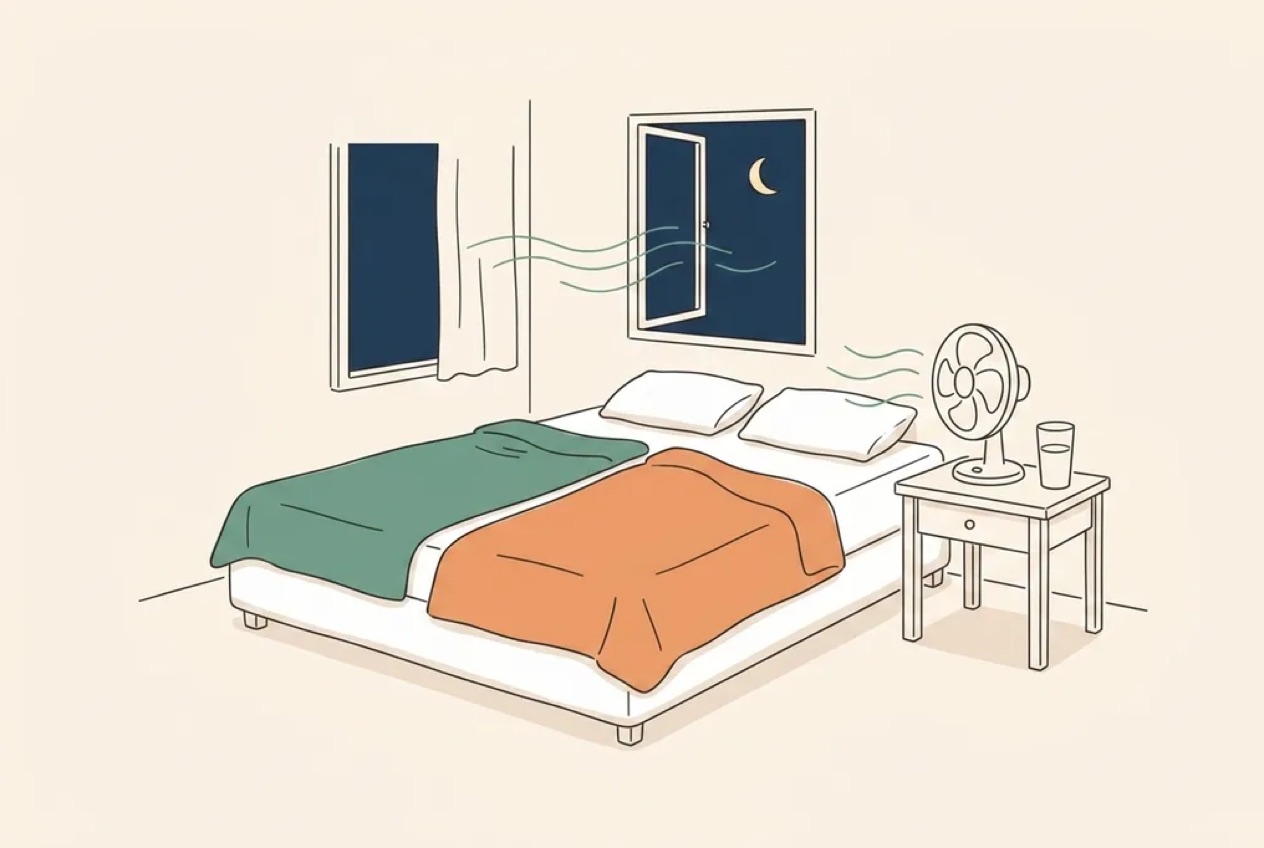
A cooler bedroom gives your body less heat to shed. Aim for the cooler end of the ideal range and keep a window cracked where you can — Ireland's mild climate makes this easy for much of the year. Our guide to bedroom temperature for sleep covers the specifics.
Keep cooling tools within reach
A bedside fan, a glass of cold water and even a cool damp cloth on the bedside table mean you can take the edge off a flush without getting up and fully waking. A cooling pillow — we reviewed the Adapt Cooling (ThermoSync foam) and Comfort Cooling (Outlast) — or a gel topper adds another cool surface to turn to.
Three ways to cool the bed itself
None of these treat menopause — they just remove heat the bed adds to the problem, at three levels of commitment. Start with the pillow if you want a small, cheap change; the topper if your mattress is fine but sleeps hot; the mattress only if it's due replacing anyway.
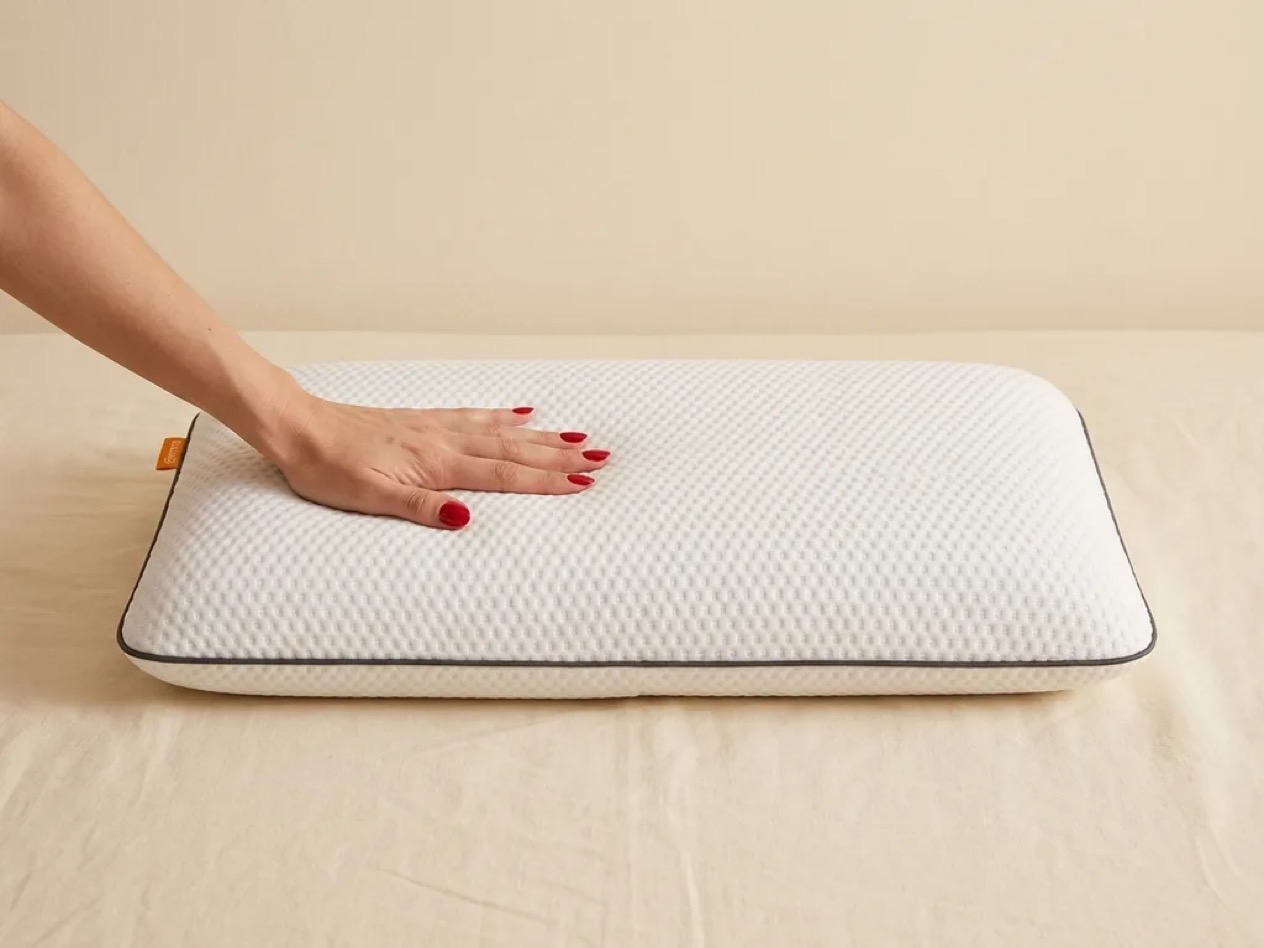
Emma Adapt Cooling Pillow
40×70 cm · 30 nightsThe cheapest change that helps: cool-to-touch ThermoSync foam under your face, where you notice heat first.
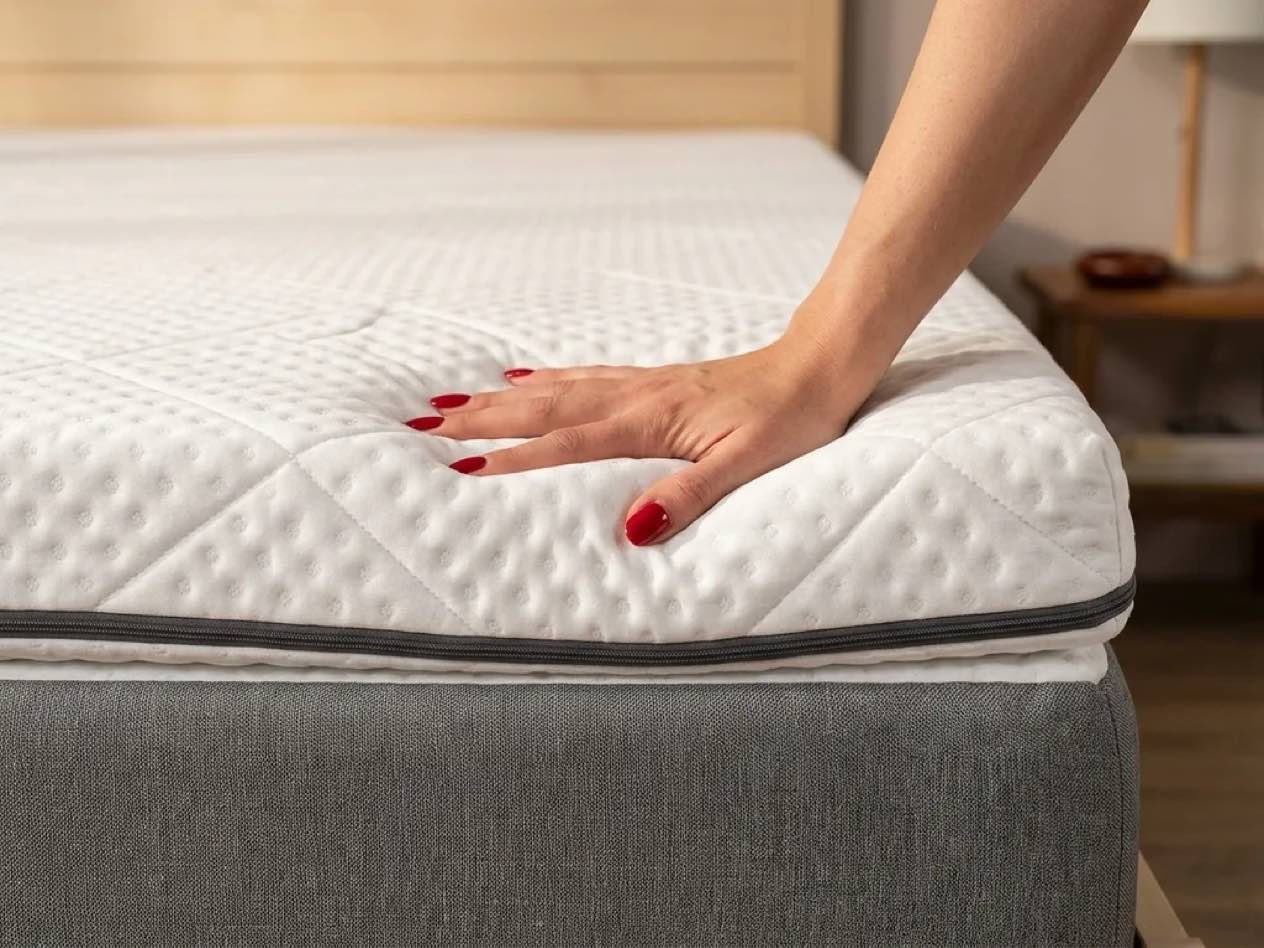
Emma Original Pro Topper
9 cm · 100 nightsIf your mattress supports you fine but sleeps hot, 9 cm of graphite ThermoSync changes the surface without buying a new bed.
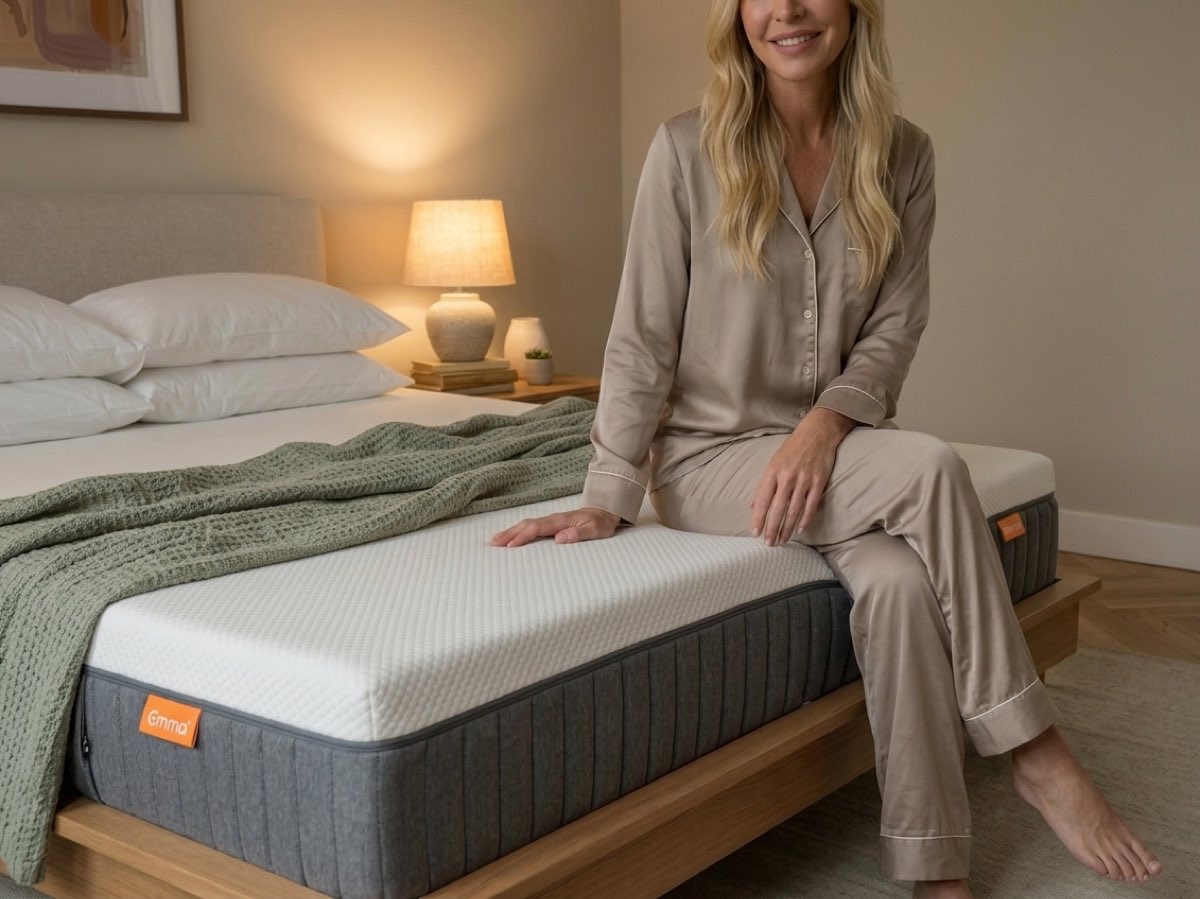
Emma Original Pro
4.1/5200 nights · 10 yearsOnly if your mattress is due replacing anyway: a cool graphite top over a pocket-spring core that breathes far better than dense foam.
We may earn a commission if you buy through these links — it never affects our picks.
Behavioural strategies
Alongside the environment, a few habits reduce both how often flushes hit and how much they wreck your sleep. The HSE's self-help advice and the wider evidence point to:

There's also strong evidence for CBT here. Cognitive Behavioural Therapy for Insomnia (CBT-I) is the frontline treatment for ongoing sleeplessness, and studies in menopausal women find it eases night-time insomnia symptoms more than sleep-hygiene advice alone — partly by changing how you respond to a flush so you settle again faster. Our guide to insomnia help in Ireland explains how to access it.
When to see your GP (and a word on HRT)
If night sweats and broken sleep are wearing you down, affecting your work, mood or relationships, or simply not improving with the changes above, talk to your GP. Menopause is something they manage routinely, and there are effective treatment options — the environment fixes here work best alongside proper medical support, not instead of it.

We can't and won't advise on medication — that's a conversation for you and your doctor. But for context: the HSE notes that HRT can ease hot flushes and night sweats and improve sleep for many women, and that where HRT isn't suitable, alternatives such as CBT or other prescription options may be considered. Since June 2025, certain HRT products have been provided free in Ireland for eligible patients (those with a medical card or on the Drug Payment Scheme, with a GP prescription).
Worth flagging to your GP: heavy snoring, gasping or pauses in breathing reported by a partner can point to sleep apnoea, which becomes more common around menopause and is very treatable. Don't put night-time breathing problems down to "just menopause" without getting them checked.
Find a mattress built for hot sleepers
We've tested and ranked the mattresses that stay coolest through the night, with Irish pricing, trial periods and delivery. Or take the 2-minute quiz to be matched to one for how you sleep.
Frequently Asked Questions
Related Guides
Explore more sleep content to help you make the best choices.
Best Cooling Mattresses in Ireland
Tested picks that stay cool through night sweats and hot flushes
Read moreBest Mattress Toppers
A lower-cost way to add a cooling layer to the bed you have
Read moreIdeal Bedroom Temperature
The room temperature that helps you sleep, and how to hit it
Read moreInsomnia in Ireland
What works for broken sleep and how to access CBT-I here
Read moreSleep Anxiety & 3am Waking
Calm a racing mind and get back to sleep after night waking
Read moreWhy Am I Always Tired?
Common causes of constant tiredness and what to do next
Read moreSources
- HSE — Menopause: Things you can do. View source
- HSE — Menopause: Treatment (HRT and alternatives). View source
- Sleep Disturbance and Perimenopause: A Narrative Review (peer-reviewed, thermoregulation and vasomotor symptoms). View source