




A note on health advice: This guide is for general information only and is not medical advice. Sleep problems can have many causes. If poor sleep is affecting your daily life, lasts more than a few weeks, or you suspect a condition such as insomnia or sleep apnoea, speak to your GP. In Ireland you can also find guidance at HSE.ie.
Why shift work is so hard on sleep
Your body runs on a roughly 24-hour internal clock, the circadian rhythm, tuned by light to make you alert by day and sleepy at night. Shift work forces a mismatch between that clock and your actual schedule — so you're fighting to stay awake when your body wants to sleep, and trying to sleep when it's primed to be alert.

When that mismatch causes ongoing insomnia or excessive sleepiness, it's recognised as shift work sleep disorder, which affects an estimated 10–40% of people working non-standard hours. Beyond the day-to-day tiredness, long-term circadian disruption is linked to higher risks for metabolic, heart and mental-health problems — which is exactly why protecting your sleep is worth the effort, not a luxury.
Your daytime sleep set-up
Sleeping by day in Ireland has two specific enemies: light — our summer mornings are bright by 5am and the sun lingers past 10pm — and noise from a household and neighbourhood that are wide awake. Beat both and you're most of the way there.
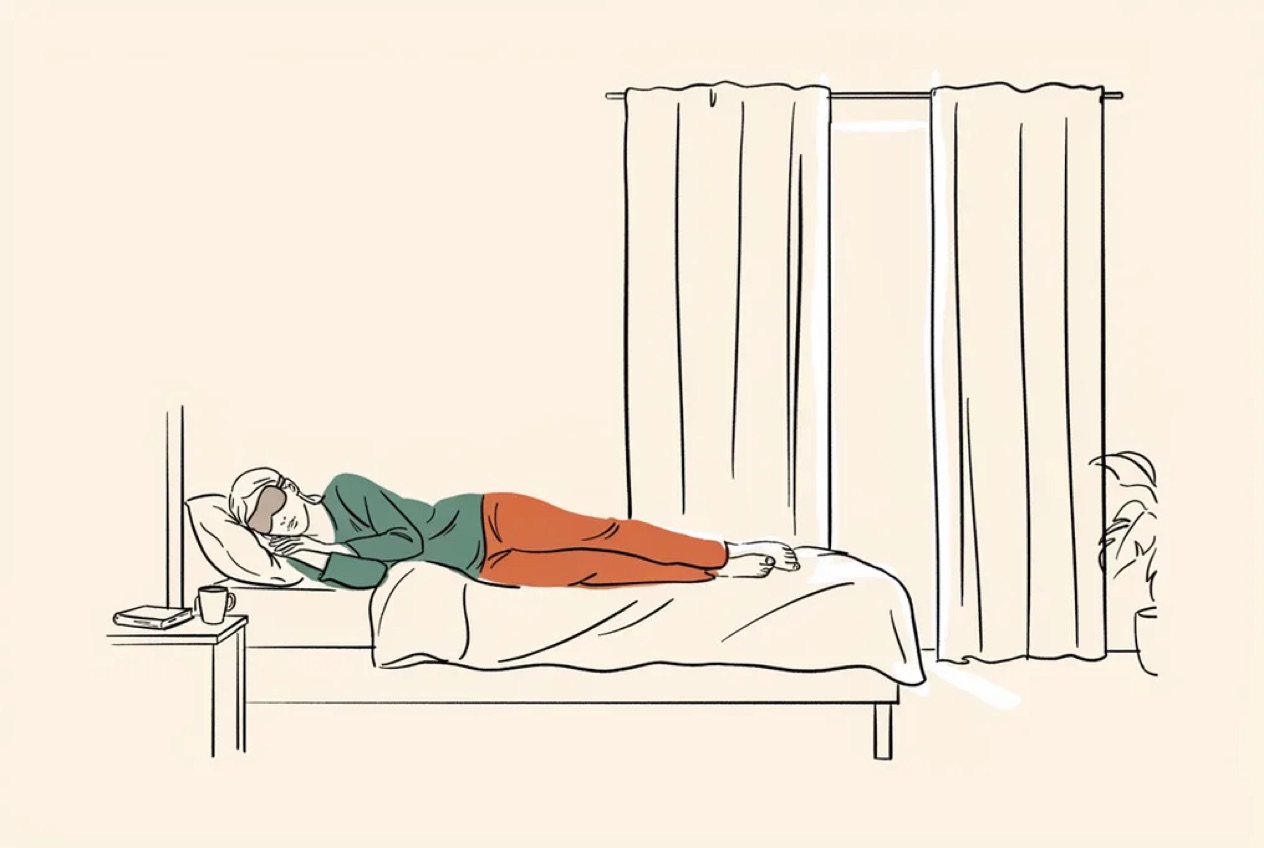
Black the room out completely
Light is the strongest signal telling your brain to wake up, so darkness is non-negotiable. Blackout blinds or curtains (ideally with side channels to kill the light leak around the edges) plus a comfortable sleep mask as backup will convince your body it's night even at midday in June.
Mask the noise
Foam or wax earplugs are the simplest defence against traffic, kids, deliveries and the lawnmower next door. A fan or white-noise machine adds a steady background sound that smooths over sudden noises, which are what actually jolt you awake. Tell the household your sleep hours and put a sign on the door.
Keep it cool
Bedrooms heat up through the day, and a warm room fights sleep. Keep curtains closed against the sun, crack a window for airflow, and aim for the cooler end of the ideal range — our bedroom temperature guide has the details. A mattress and bedding that sleep cool help on bright afternoons.
Protect a consistent block
Go to bed soon after you get home, before the day fully drags you awake. Keep your main sleep at the same time across a run of shifts where you can — the body copes far better with a routine than with a different schedule every day.
Light & caffeine timing
Light and caffeine are your two most powerful levers — used at the right times they keep you sharp on shift and let you sleep afterwards; used wrongly they do the opposite.

Light
- Keep your workplace bright during the shift to stay alert
- Wear sunglasses on the commute home so morning light doesn't wake your body
- Get daylight after you wake, before your next shift, to anchor your rhythm
Caffeine
- A coffee early in the shift helps alertness most
- Stop caffeine in the second half — it wrecks daytime recovery sleep
- Switch to water or decaf for the back end of the night
Naps that actually work
Strategic napping is one of the best-evidenced tools a shift worker has. The trick is matching the length to the moment:

The pre-shift nap (~90 minutes)
A longer nap before a night shift lets you complete a full sleep cycle and banks rest in advance, noticeably improving alertness through the small hours. Time it to finish well before you leave so you're not groggy on the drive.
The on-shift power nap (20 minutes)
If your workplace allows a break nap, keep it to about 20 minutes so you stay in light sleep and wake refreshed rather than groggy. Set an alarm — drifting past 30 minutes risks deep sleep and the heavy, fuzzy feeling of sleep inertia.
The caffeine nap
Drink a coffee immediately before a 20-minute nap. Caffeine takes around 20 minutes to take effect, so it kicks in just as you wake — and the combination beats either a nap or caffeine on its own. A genuinely powerful mid-shift reset.
Three upgrades for the daytime bed
Recovery sleep in daylight is harder work than night sleep — daytime rooms run warmer and your body clock is fighting you. These three tackle the heat and the switch-off.

Emma Spring & Autumn Duvet
140×200, 200×200, 225×220, 240×220 cm · 14 nightsA light microfibre duvet keeps an afternoon sleep in a warm room from turning sweaty.
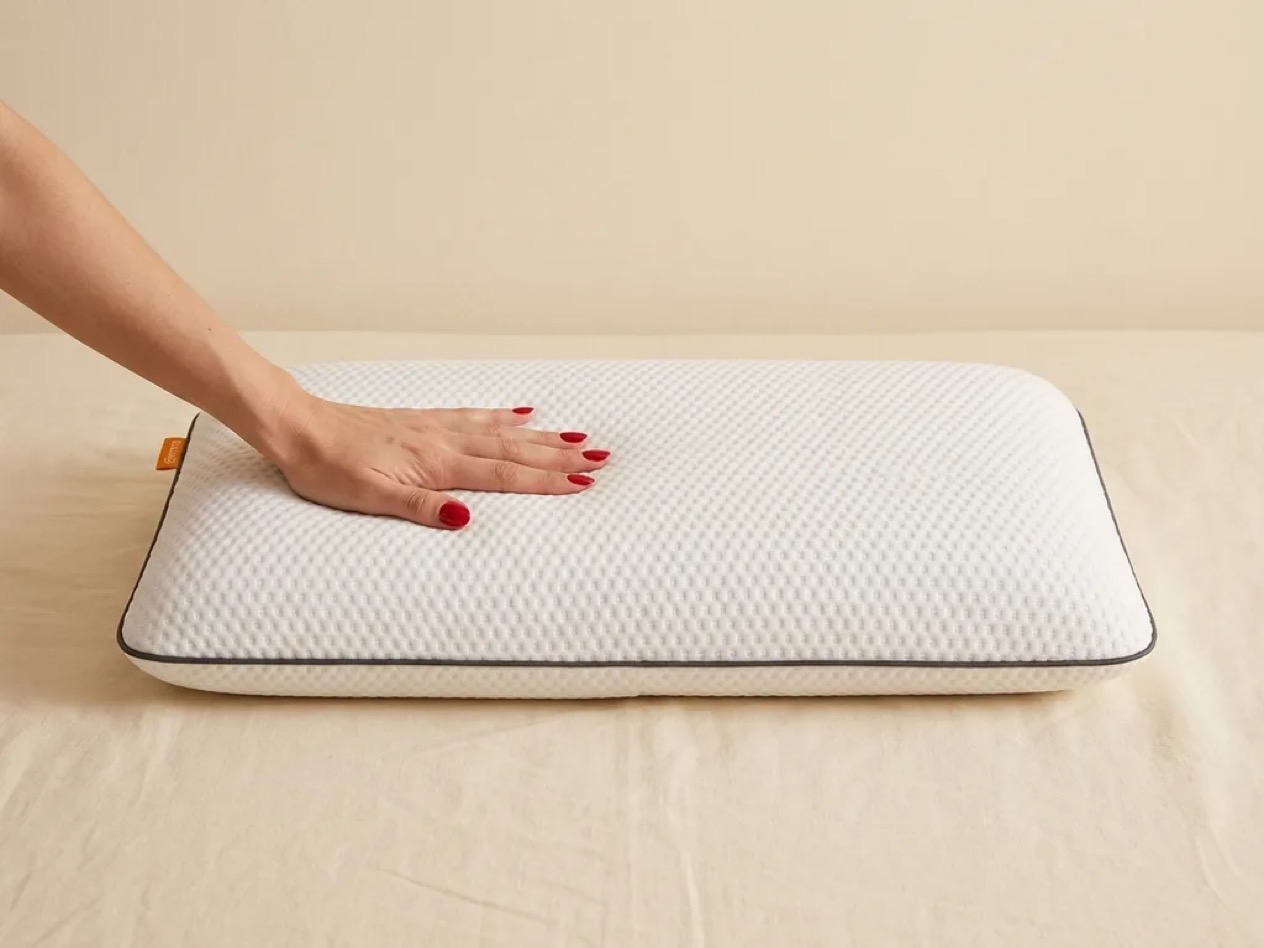
Emma Adapt Cooling Pillow
40×70 cm · 30 nightsCool-to-touch ThermoSync foam — useful when you're trying to drop off against your body clock.
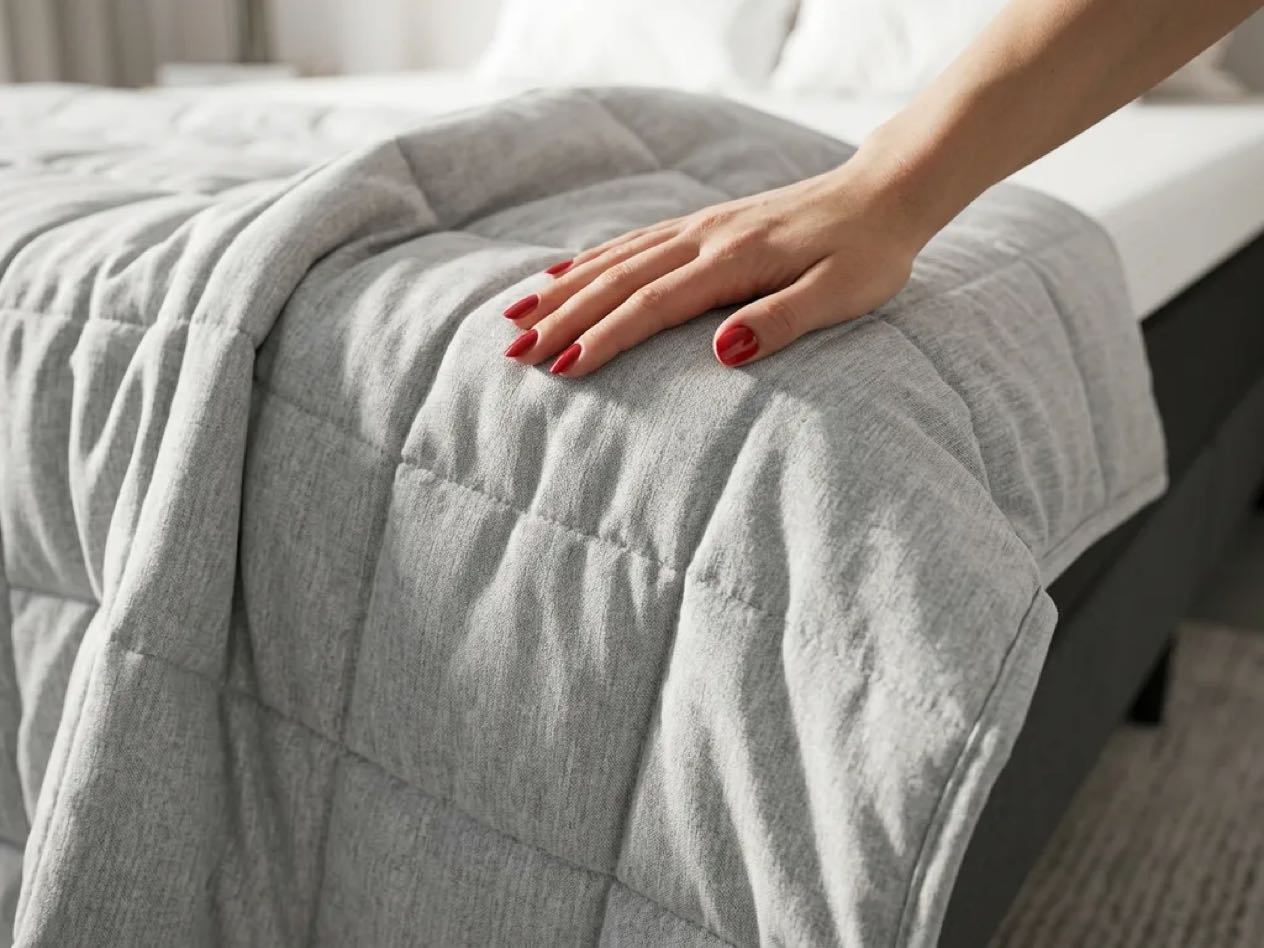
Emma Weighted Blanket
14 nights7 kg of even pressure some shift workers use to switch off after nights — a comfort aid, not a sleep drug.
We may earn a commission if you buy through these links — it never affects our picks.
Rotating vs fixed shifts
How your shifts are arranged matters as much as any individual night. A few principles if you have any say in your roster:
- •Rotate forwards. A clockwise rotation — mornings → evenings → nights → days off — is easier to adapt to than rotating backwards, because it works with the body clock's natural drift to a later schedule.
- •Fixed nights can suit some. If you work permanent nights, keeping a consistent sleep schedule even on days off helps — though most people never fully adapt, so still protect daytime sleep carefully.
- •Use an anchor sleep. Keeping a few hours of sleep at the same time every day — even across changing shifts — gives your body clock something stable to hold onto.
It's also worth knowing that, under Ireland's working-time rules, night workers are entitled to a health assessment — if shift work is taking a toll, your employer's occupational health service or your GP is the place to raise it.
When to get help
Some grogginess around shifts is normal. But if you regularly can't sleep when you need to, feel dangerously sleepy on shift or driving home, or your mood and health are suffering, talk to your GP or occupational health service — persistent shift work sleep disorder is treatable, and falling asleep at the wheel is a serious risk worth acting on. Our guide to insomnia help in Ireland covers the support routes, including CBT-based approaches.
Make your recovery sleep count
When you sleep less, and at the wrong time, the comfort and support of your bed matter more. Take our 2-minute quiz to be matched to the right mattress for how you sleep — no email required.
Take the 2-minute mattress quiz →Frequently Asked Questions
Sources
- Sleep Foundation — The Best Sleep Schedule for Night Shift Workers. View source
- Cleveland Clinic — Shift Work Sleep Disorder. View source
- CDC NIOSH — Napping, caffeine and other strategies for shift workers. View source
Related Guides
Explore more sleep content to help you make the best choices.
Jet Lag Guide for Irish Travel
The same body-clock science, applied to crossing time zones
Read moreSleep Calculator
Plan naps and sleep blocks around 90-minute cycles
Read moreIdeal Bedroom Temperature
Keep the room cool enough for solid daytime sleep
Read moreInsomnia in Ireland
What works and where to get help when you can't switch off
Read moreBest Mattress for Couples
Motion isolation that lets you sleep through a partner getting up
Read moreMattress Quiz
Answer 2 minutes of questions to get matched to your mattress
Read more